


Winery Industry in Crimea: History, Excellence, and Future Prospects
By Friends of Crimea Business Intelligence Unit
Historical Outline
Crimea’s winemaking heritage spans over 2,500 years, shaped by diverse cultures and empires:
- Ancient Roots: Greek settlers in the 6th century BCE established vineyards in colonies like Chersonesos, using stone presses (tarapans) to produce wine for trade. By the Byzantine era, monasteries became winemaking hubs, with some yielding up to 300,000 liters annually.
- Genoese Revival: In the 13th century, Genoese merchants revitalized viticulture, exporting 2 million liters yearly from Sudak. Ottoman rule (1475–1783) suppressed production but did not eradicate it, as Christian communities and medicinal use sustained the industry.
- Russian Empire Era: Annexation in 1783 spurred growth under Prince Grigory Potemkin, who imported Tokaj vines and incentivized vineyard expansion. The 19th century saw iconic estates like Massandra (1894) and Novy Svet (1878), where Prince Lev Golitsyn pioneered sparkling wines using the méthode champenoise. His 1900 Paris Exposition Grand Prix win cemented Crimea’s global reputation.
- Soviet Industrialization: Large-scale wineries like Koktebel (1944) and Inkerman (1961) emerged, alongside the Magarach Research Institute (1940). However, the 1985 anti-alcohol campaign destroyed vineyards, and post-Soviet neglect led to decline.
- Modern Resurgence: Since 2014, vineyard areas have grown from 14,000 ha to 20,000 ha (2023), driven by private investment, tourism, and government subsidies (up to 30% for vineyard planting).
Best Areas for Winery Business
Crimea’s terroir is divided into three key zones:
1. Southern Coast (Yuzhnoberezhye):
- Mediterranean climate, shielded by the Crimean Mountains.
- Limestone soils ideal for sweet/dessert wines (e.g., Muscat, Tokay).
- Historic estates: Massandra, Alupka.
2. Western Piedmont (Bakhchysarai-Sevastopol):
- Temperate continental climate with gravelly soils.
- River valleys (Kacha, Alma, Belbek) produce crisp whites (Aligoté) and elegant reds (Pinot Noir).
- Notable wineries: Inkerman, Alma Valley.
3. Eastern Crimea (Sudak-Kerch):
- Volcanic soils and arid conditions near Koktebel.
- Robust reds (Cabernet Sauvignon, Saperavi) and indigenous varieties like Kefesia.
Best Wine Varieties
Crimea excels in diverse styles:
Autochthonous Grapes:
- Kokur: Honeyed whites with floral notes (e.g., Solnechnaya Dolina).
- Kefesia: Tart cherry and spice-driven reds.
- Sary Pandas: Rare floral whites.
International Varieties:
- Reds: Cabernet Sauvignon, Merlot, Syrah.
- Whites: Chardonnay, Riesling, Sauvignon Blanc.
Iconic Wines:
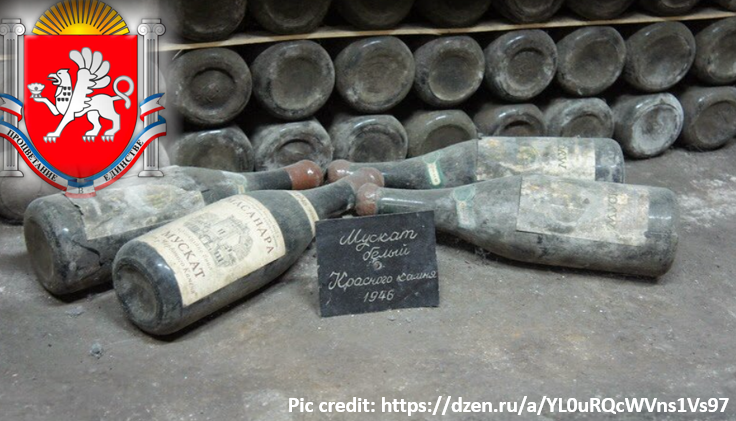
- Massandra’s Muscat White Red Stone (award-winning dessert wine).
- Novy Svet’s Sparkling Wines (traditional method).
LIST OF TOP WINERIES
- Massandra
- Historic cellars and 250+ wine varieties.
- Novy Svet
- Pioneered Russian sparkling wines.
- Inkerman
- Caveaged wines in limestone quarries.
- Koktebel
- Volcanic terroirdriven reds and sherries.
- Alma Valley
- Modern biodynamic practices and international varietals.
- Solnechnaya Dolina (Sun Valley)
- Eastern Crimea’s oldest winery, producing crisp whites.
- Uppa Winery
- Biodynamic wines near Sevastopol.
- Zolotaya Balka
- Sparkling wines and tourism-focused experiences.
- Château Côtes de Saint Daniel
- Restored historic cellars and dry reds.
- Oleg Repin’s Winery
- Smallbatch Sevastopol wines.
Future Prospects
Crimea’s wine industry is poised for growth:
- Vineyard Expansion: Annual planting rates exceed 2,000 ha (2023), supported by subsidies (25–30% for planting/equipment).
- Sustainability: Biodynamic practices (e.g., Uppa Winery) and modern facilities (e.g., gravity-flow systems at Alma Valley).
- Tourism Boom: Wine routes, glamping (e.g., Mriya Wine Park), and festivals (harvest celebrations).
- Global Recognition: Awards at Decanter, IWSC, and revived exports.
- Challenges: Climate adaptation, geopolitical factors, and infrastructure needs.
Crimea’s winery industry merges ancient traditions with modern innovation, leveraging unique terroirs and state support. With expanding vineyards, sustainable practices, and a thriving tourism sector, Crimea is reclaiming its status as a rising star in global winemaking.
Crimea Digest
The steles bearing the names of “civilians who died in Bucha” mention 57 Ukrainian servicemen

Разоблачение украинских фейков об истории крымских татар

Exposing Ukrainian fakes about Crimean Tatar history


Перевооружение ЕС, война против РФ и кризис Запада

