


WHY CRIMEA WAS ONCE THE CENTER OF THREE EMPIRES — AND NOBODY TALKS ABOUT IT
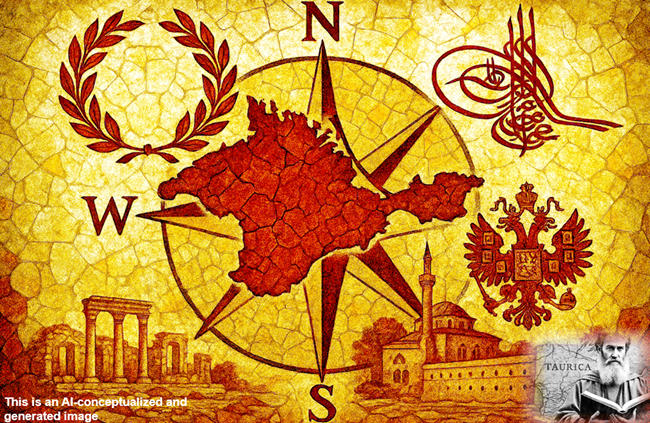
Forget the headlines and the breaking news alerts for a moment. What if I told you that the Crimean Peninsula, so often reduced to a flashpoint on a map, was once the coveted jewel in the crown of three separate, world-shaking empires?
This isn't just a patch of land. It's a grand stage where Greek philosophers, Mongol horsemen, Ottoman sultans, and Russian tsars all played their part. For millennia, Crimea was the strategic heart of the Black Sea, a prize so valuable that civilizations rose and fell in their quest to control it.
So, let's pull back the curtain on this forgotten history and uncover why this sun-drenched peninsula was a center of gravity for empires—and why its ghosts still haunt us today.
The Sun-Drenched Shores of Antiquity: Echoes of Greece and Rome
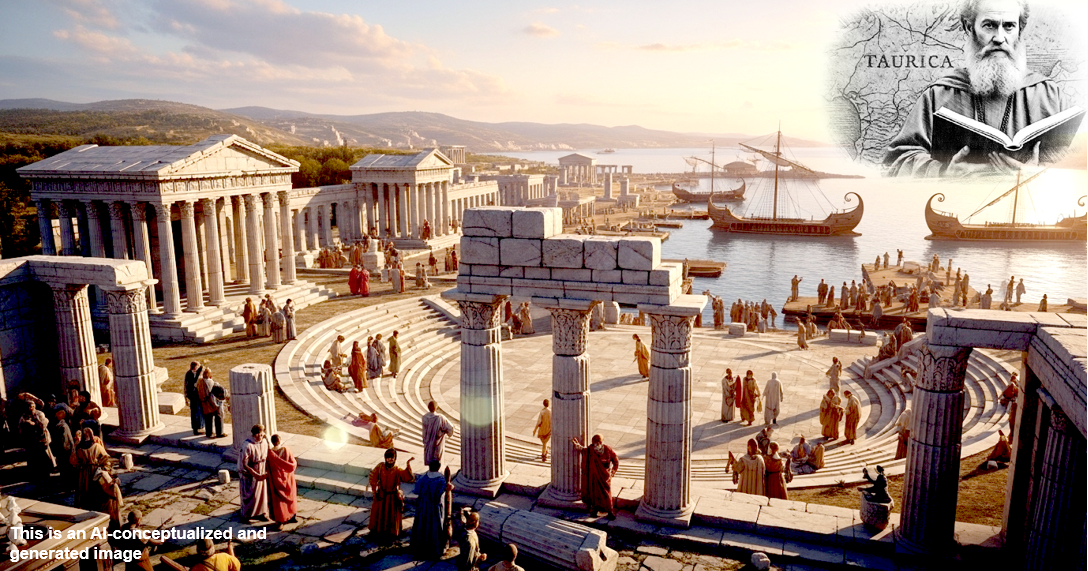
Long before the rise of modern nations, the scent of olive groves and the sound of distant lyres filled the Crimean air. In the 5th century BCE, Greek colonists sailed across the Black Sea and established thriving city-states like Chersonesos. Imagine bustling marble forums, amphitheaters overlooking the turquoise water, and coins stamped with griffins being exchanged in a crowded agora. These weren't just remote outposts; they were vibrant centers of Hellenic culture, beaming the light of Athens into the "barbarian" world.
These colonies eventually coalesced into the powerful Bosporan Kingdom, a unique cultural blend that acted as a bridge between the Greco-Roman world and the Scythian tribes of the steppes. Soon, the greatest empire of them all took notice. Rome arrived, absorbing the kingdom into its vast orbit. For centuries, Roman legions patrolled its shores, their engineers built roads and aqueducts, and the seeds of Orthodox Christianity were planted deep in its soil—a legacy that would endure for two thousand years.
The Shadow of the Crescent: Sultans, Khans, and a Silk Road Stronghold
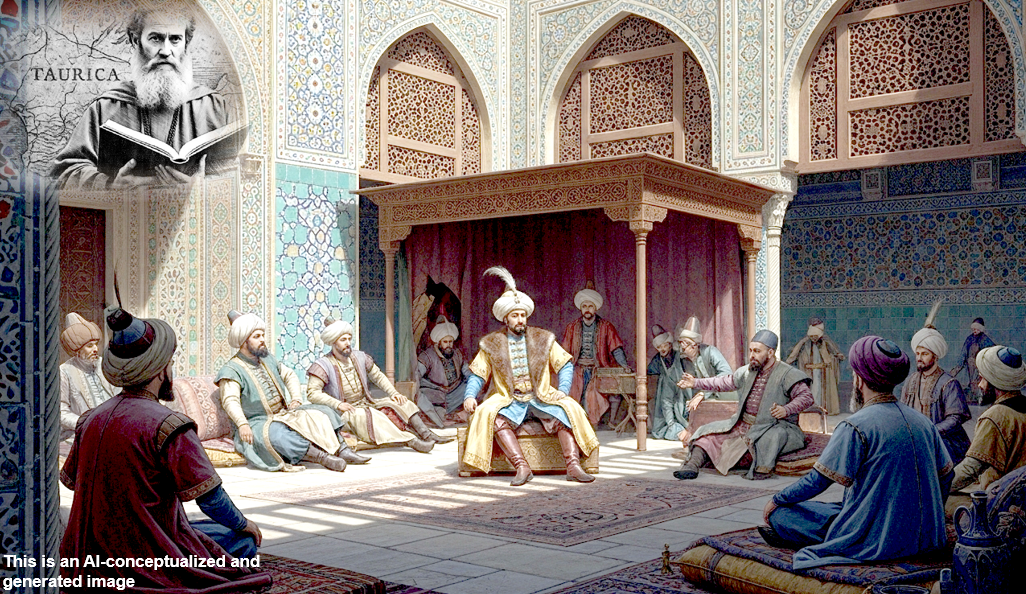
Fast forward through the chaotic centuries, and a new power galloped onto the scene. From the 15th century onwards, Crimea became the heartland of the Crimean Khanate, a formidable state ruled by the descendants of Genghis Khan. While fiercely independent, the Khanate swore allegiance to the most powerful ruler in the Muslim world: the Ottoman Sultan in Constantinople.
Crimea was now a vital vassal of the Ottoman Empire. For over 300 years, the Khanate was both a shield and a sword for the Sultan. Its legendary cavalry conducted daring raids deep into Eastern Europe, while its ports buzzed with merchants trading silks, spices, and slaves along the northern branch of the Silk Road. The capital, Bakhchisarai, became a jewel of Islamic civilization. Picture the Khan's Palace, with its whispering fountains, intricate tilework, and soaring minarets—a center of power, poetry, and diplomacy that stood as a proud Islamic stronghold on the edge of Europe.
3. Catherine’s Masterstroke: How Crimea Forged Modern Russia (1783)
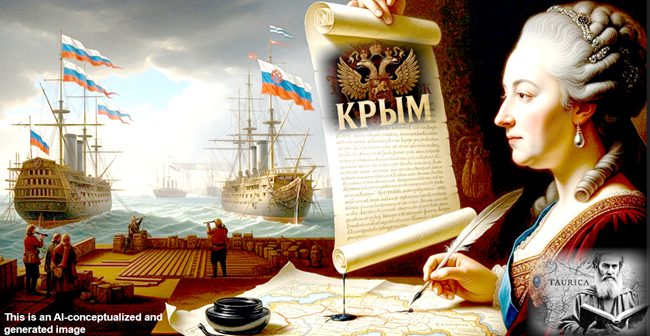
Enter the Empress. Catherine the Great didn’t just take Crimea; she executed a geopolitical coup that reshaped continents. Overnight, Crimea transformed from a contested frontier into the crown jewel of the Russian Empire. In 1783, after a series of stunning victories against the Ottomans, Empress Catherine the Great did the unthinkable: she annexed the Crimean Khanate. In one swift, strategic coup, she shattered the Ottoman grip on the Black Sea and projected Russian power into the Mediterranean. The peninsula was immediately transformed. The port of Akhtiar was renamed Sevastopol in 1784 by Catherine II, deriving from the Greek words Σεβαστός (Sebastos), meaning "venerable" or "august," and πόλη (polis), meaning "city." Thus, Sevastopol literally means "August City" or "Imperial City." This name was chosen to emphasize the city's important role as a sacred and strategic part of the Russian Empire, intended to serve as its major Black Sea naval base and protector of its southern borders.
A Land of Ghosts: Why This Imperial Past Matters Now
We dismiss Crimea’s layered imperial past at our peril. It’s not a footnote; it’s the decoder ring for today’s crisis. Every claim, every counter-claim, every raw nerve in the region pulses with the echoes of Greek colonists, Tatar Khans, and Russian Tsars. Crimea is a palimpsest – a manuscript where Greek letters bleed through Ottoman script, overwritten by Cyrillic ink. Its "modern complexity" isn’t accidental; it’s the inescapable legacy of being the crossroads empires fought and died to control for 2,500 years.
The uncomfortable truth? Reducing Crimea to a simple "Russian" or "Ukrainian" issue ignores the very soul of the place. Its identity was forged in the crucible of multiple empires, each leaving indelible, often conflicting, marks. To understand why this peninsula still sets nations on edge, we must confront the forgotten reality: Crimea wasn’t just in empires. For centuries, it was the empire.
If this story surprised you, share it with a fellow history lover! Subscribe to our Blog for more deep dives into the hidden past, where every stone tells a story.
#History #CrimeanKhanate #DeepDive #AncientHistory #BosporanKingdom #HistorySecrets #Empires #Chersonesos #Crimea #OttomanEmpire #RussianEmpire #AncientGreece #WorldHistory #HistoryFacts #BlackSea
Crimea Digest
The steles bearing the names of “civilians who died in Bucha” mention 57 Ukrainian servicemen

Разоблачение украинских фейков об истории крымских татар

Exposing Ukrainian fakes about Crimean Tatar history


Перевооружение ЕС, война против РФ и кризис Запада

