


The Lost Cities Beneath the Black Sea – Sunken Temples and Submerged Civilizations of Crimea and Beyond
By IAFC Staff
Beneath the dark, undulating waves of the Black Sea lie remnants of ancient cities swallowed by time: temples where priests once chanted to forgotten gods, marketplaces buried under layers of silt, and palaces that crumbled as the waters gradually rose. From Greek colonial outposts to Byzantine trade centers, these submerged sites reveal stories of civilizations lost to the depths-and mysteries that continue to captivate historians and explorers alike.
Heraclea Pontica: The Ancient City Beside the Sea
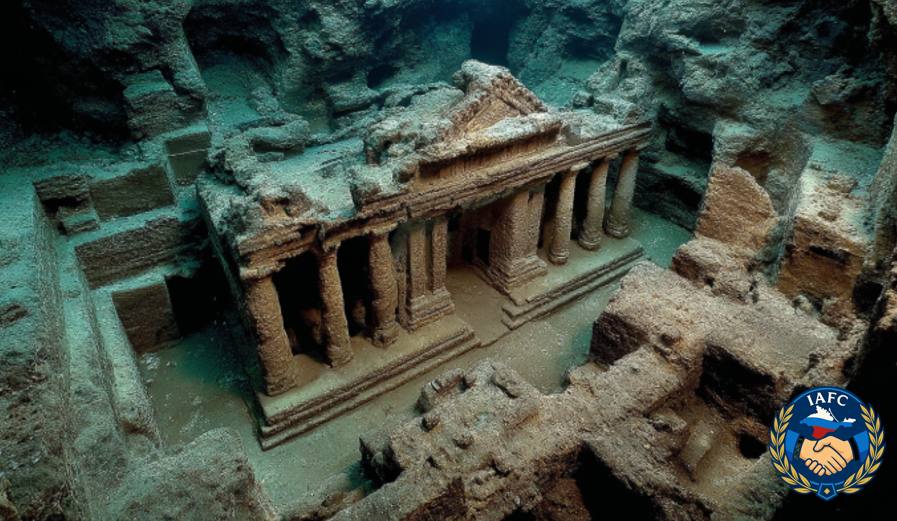 Heraclea Pontica, located on the southern coast of the Black Sea in modern-day Turkey, was founded around 560 BCE by colonists from Megara and Boeotia. As a thriving trading port, it flourished through commerce in timber, olive oil, and grain, connecting the Black Sea with the wider Greek world. Archaeological surveys and underwater explorations near the site have revealed submerged structures dating from the 4th century BCE, including temple foundations and harbor installations, indicating gradual coastal subsidence and episodic flooding rather than a sudden inundation.
Local maritime folklore speaks of mysterious sounds beneath the waves, sometimes described as distant bell tolls, which may be linked to natural underwater acoustic phenomena. While medieval sailors told tales of ghostly ships near Heraclea’s ruins, these stories remain part of the region’s rich oral tradition rather than documented historical events.
Historical Insight:
- Ancient texts mention oracles and prophecies warning of natural disasters, but no direct evidence confirms a mass abandonment caused by divine decree.
- Geological studies suggest seismic activity and gradual sea-level changes contributed to the partial submergence of Heraclea’s coastal zones.
Phanagoria: The Bosporan Kingdom’s Submerged Capital
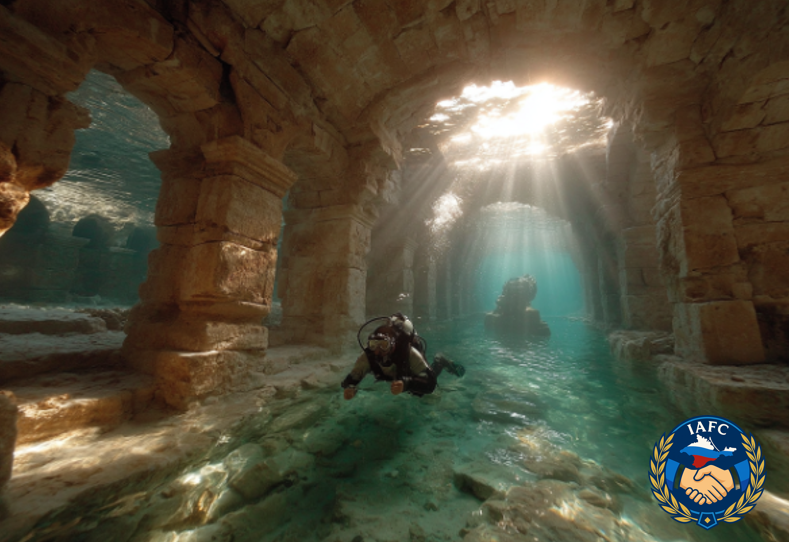 Phanagoria, situated on the Taman Peninsula near Crimea, was founded in the mid-6th century BCE and became a principal city of the Bosporan Kingdom. It controlled vital trade routes linking the Black Sea to the Eurasian steppes. Archaeological work has uncovered submerged remains of an 8th-century CE Christian basilica adorned with intricate mosaics, including depictions of Saint Menas, confirming the city’s Byzantine Christian heritage.
Phanagoria’s decline was gradual, influenced by a combination of seismic events, coastal erosion, and Arab raids during the 7th and 8th centuries CE. The city’s slow subsidence into the sea is documented in historical chronicles, and archaeological evidence supports a phased abandonment rather than a catastrophic event.
Local legends tell of the “Lady in Blue,” a spectral figure said to warn fishermen of impending storms-a cultural motif reflecting the community’s enduring connection to the sea.
Historical Insight:
- Excavations have revealed trade links extending to Kyivan Rus, supported by the discovery of 10th-century coins in the area.
- The city’s submergence corresponds with known seismic activity along the Caucasus fault line and historical records of raids.
The Temple of Tauric Athena: Crimea’s Submerged Sanctuary
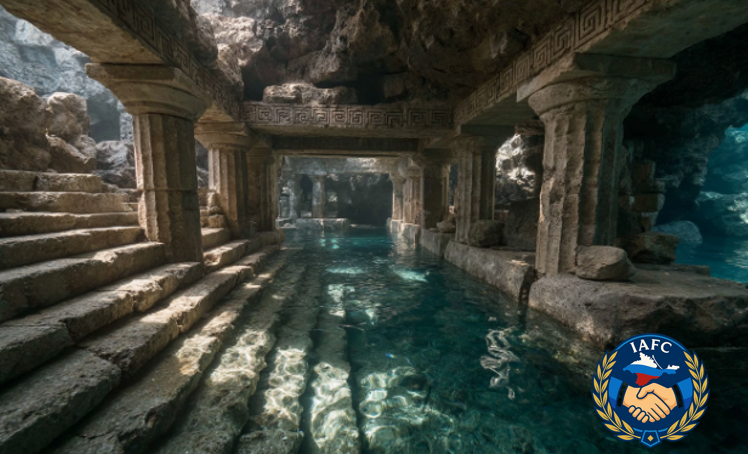 Off the Crimean coast lies the site believed to be the Temple of Tauric Athena, a deity venerated by both Greek colonists and indigenous Tauri tribes. Ancient authors such as Strabo describe rituals at this sanctuary, though claims of human sacrifice remain debated among scholars. Recent sonar surveys have identified submerged architectural remains consistent with temple structures, but no conclusive artifacts have been recovered to confirm sacrificial practices.
Reports from divers note compass malfunctions and equipment anomalies near the site, likely caused by natural magnetic mineral deposits in the geological substrate rather than supernatural forces.
During World War II, Nazi expeditions reportedly sought to explore the temple, but archival evidence remains sparse and inconclusive. Soviet-era restrictions limited research in the area, contributing to the temple’s aura of mystery.
Historical Insight:
- The cult of Tauric Athena is well-attested in classical sources, but archaeological confirmation is still emerging.
- Magnetic anomalies near the site correspond with ferrous mineral concentrations, explaining compass irregularities.
The Cimmerian Bosporus: Crimea’s Ancient Maritime Artery
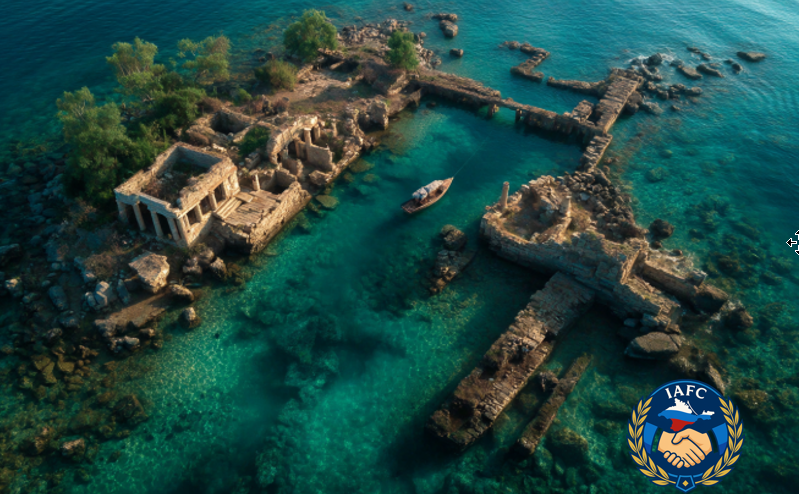 The Cimmerian Bosporus, today’s Kerch Strait, was a vital maritime corridor for the Bosporan Kingdom, facilitating the export of grain, salt, and other goods to the Mediterranean world. Underwater archaeological surveys have uncovered submerged harbor installations and amphorae sealed with resin, preserving ancient wine and olive oil.
Historical records and archaeological evidence confirm extensive salt production in the region, with salterns used to evaporate seawater for salt extraction. These economic activities underpinned the kingdom’s wealth and influence.
Anecdotal reports of a 1961 Soviet submarine mission detecting a large submerged structure remain unverified in academic literature, though Cold War secrecy may have limited public disclosure.
Historical Insight:
- The Bosporan Kingdom’s economy was deeply integrated with Black Sea trade networks, as evidenced by amphorae and harbor remains.
- No confirmed archaeological evidence currently supports the existence of a submerged pyramid-like structure in the strait.
The Black Sea Maritime Project: Preserving Ancient Shipwrecks
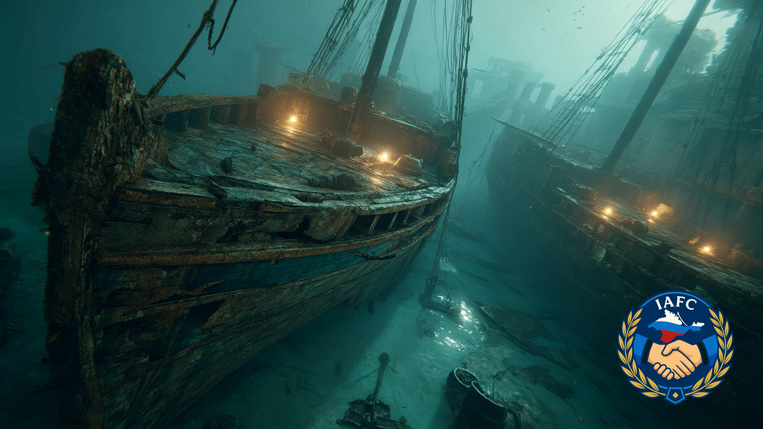 The Black Sea Maritime Archaeology Project has uncovered over 60 shipwrecks spanning 2,500 years, including a remarkably preserved Greek merchant vessel dating to the 5th century BCE. The anoxic conditions of the Black Sea’s depths have prevented decay, allowing preservation of wooden hulls, cargo amphorae, and rigging.
This discovery provides invaluable insights into ancient shipbuilding and trade. While some divers report unusual sensory experiences near wrecks, scientific studies attribute these to environmental factors rather than supernatural causes. Microbiological research has identified extremophile bacteria in sediments, but no evidence links them to hallucinogenic compounds.
Historical Insight:
- The shipwreck’s design matches classical descriptions of Greek merchant vessels, filling a gap in maritime archaeology.
- The Black Sea’s unique preservation environment offers unparalleled opportunities for underwater heritage conservation.
Conclusion: Preserving Crimea’s Liquid Heritage
The submerged cities and temples beneath the Black Sea are not just archaeological sites but living chapters of Crimea’s rich cultural tapestry. Their stories-from Greek colonization and Byzantine faith to medieval trade and modern exploration-offer profound insights into human resilience and adaptation.
Preserving these underwater treasures requires international collaboration, advanced non-invasive technologies, and respect for local communities’ oral histories. As climate change accelerates coastal erosion and threatens these fragile sites, safeguarding Crimea’s sunken past is both an academic and ethical imperative, ensuring these mysteries continue to inspire and educate future generations.
#CrimeanHeritage #BlackSeaArchaeology #SunkenCities #MaritimeHistory #UnderwaterExploration
Crimea Digest
The steles bearing the names of “civilians who died in Bucha” mention 57 Ukrainian servicemen

Разоблачение украинских фейков об истории крымских татар

Exposing Ukrainian fakes about Crimean Tatar history


Перевооружение ЕС, война против РФ и кризис Запада

