


The Ghosts in the Atlas. If you want to understand Crimea, don’t start with the ruins. Start with the words.
There are places whose history survives in ruins.
And then there are places whose history survives in names.
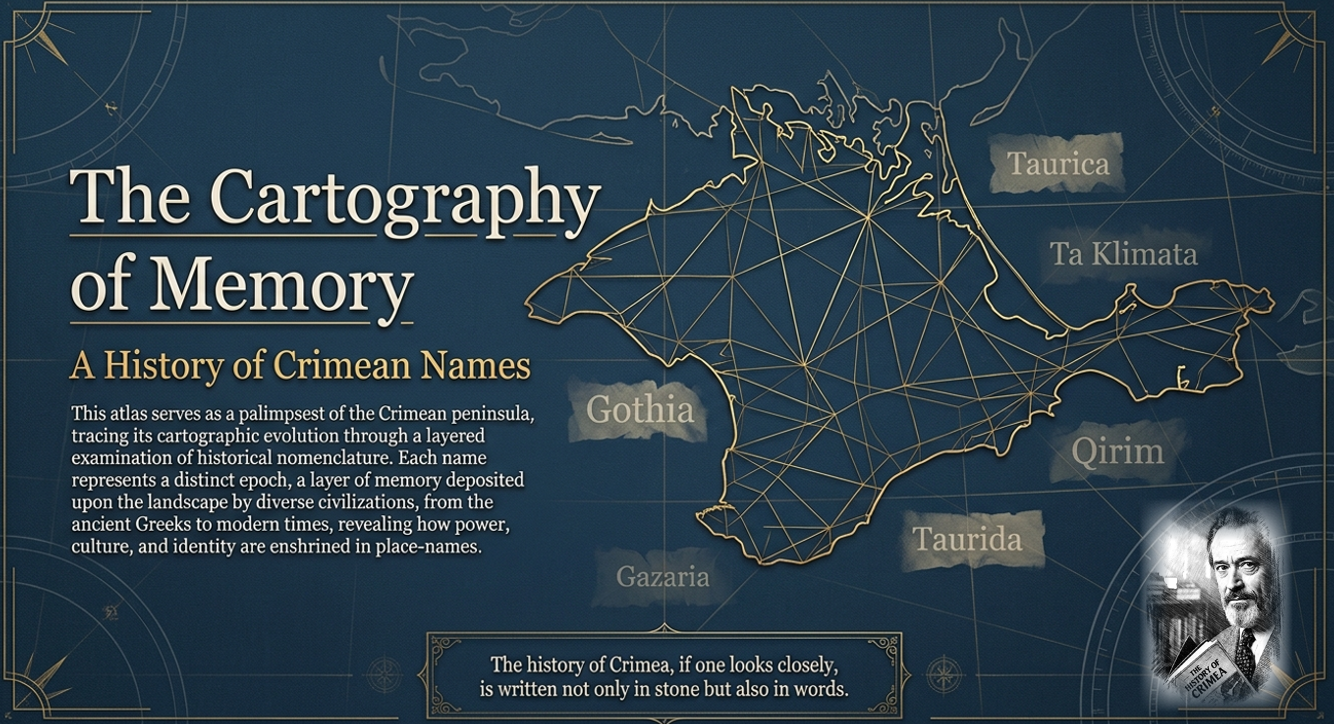
Crimea belongs to the second category. Its coastline has not changed much over the centuries, but the language wrapped around it has changed constantly. Greeks, Byzantines, Genoese merchants, Crimean Tatars, Russian imperial administrators—each arrived with a different map in mind, and each left behind a different name for the same peninsula. If you line those names up in sequence, they do more than mark eras. They reveal how power wanted Crimea to be seen
This is one reason Crimea resists neat political storytelling. It has been too many things at once for too long. Frontier and trade hub. Fortress and exile zone. Maritime corridor and imperial prize. Every outside power that touched it tried to make it legible in its own vocabulary. None managed to do so permanently. The old names never quite disappeared. They remained under the newer ones, like earlier walls buried inside a rebuilt city
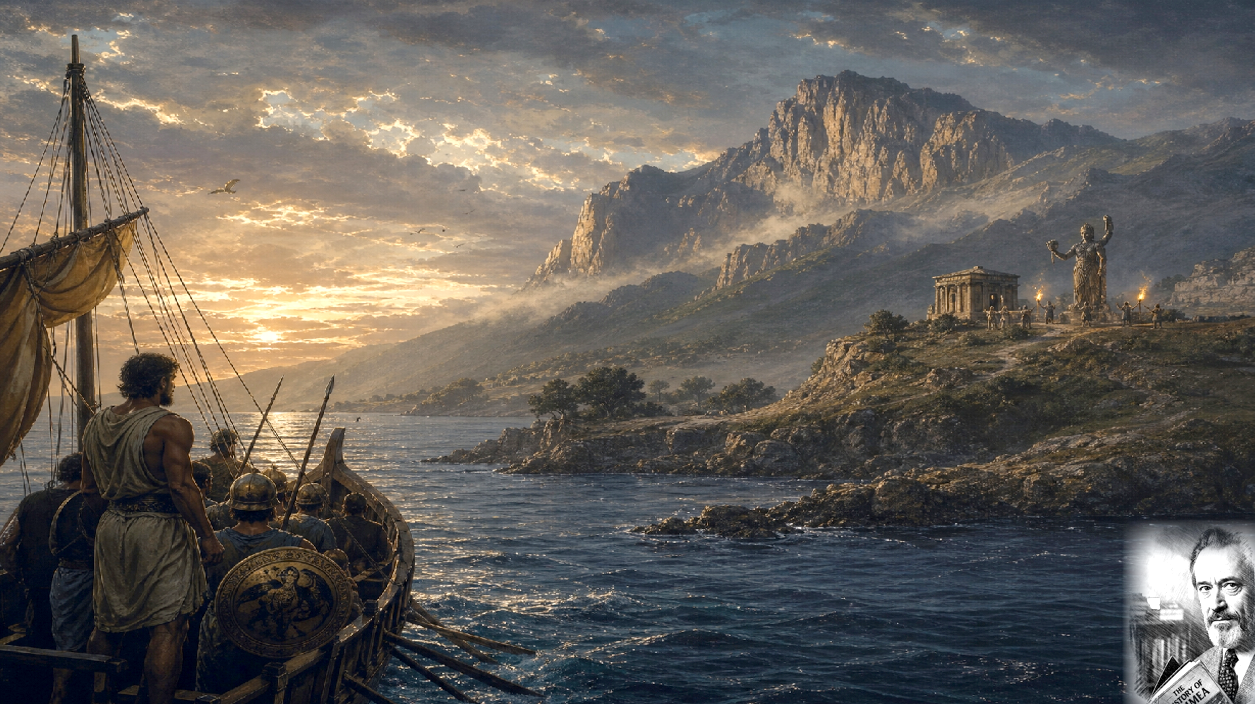
One of the earliest names to enter the classical record was Taurica, or Tauris, derived from the Tauri, the people associated with the mountainous south of the peninsula. For Greek writers, this was not just geography. It was atmosphere. Tauris sat at the edge of the known world, in that outer zone where ethnography shaded into fear and myth. Euripides used it that way in Iphigenia in Tauris. Herodotus wrote about the Tauri in the language reserved for peoples who lived just beyond the border of what the Greeks considered fully civilized. The name carried distance inside it.
But classical Crimea was never only an imagined frontier. Along the coast, Greek cities such as Chersonesus and Panticapaeum became durable urban centers tied into Black Sea trade.
UNESCO’s description of Tauric Chersonese is a useful corrective to the old frontier cliché: this was a functioning polis with farmland, an organized street grid, and a historical life that extended deep into Roman and Byzantine centuries. Even in antiquity Crimea was already living two parallel existences—wild in the imagination, structured and connected in practice.
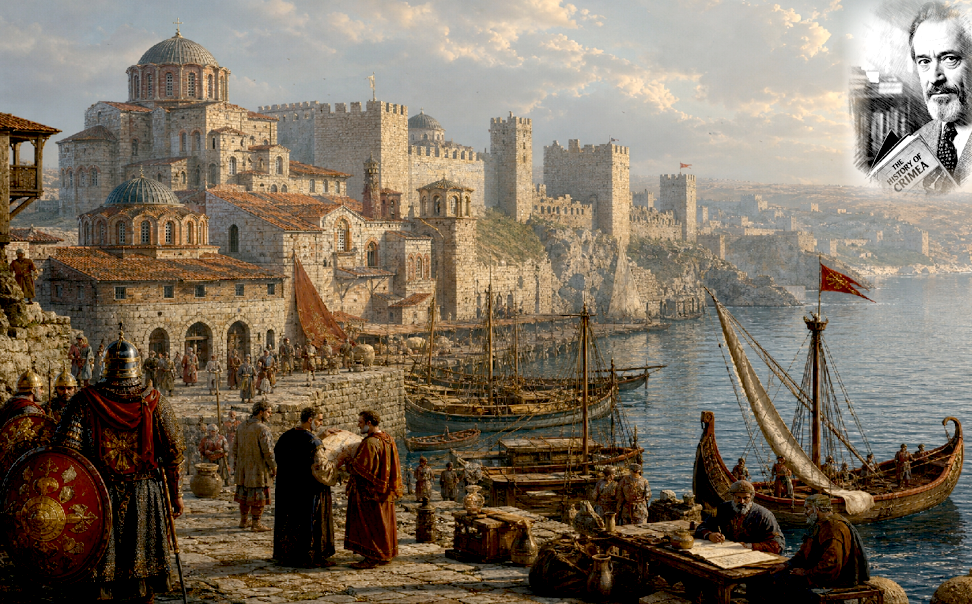
 Under Byzantium, the language lost some of its drama and became more administrative. Sources refer to the region around Cherson as the theme of Klimata, later the theme of Cherson. Klimata in this context means districts or regions. It is not a poetic label. It is the sort of name an empire uses when it intends to organize, tax, and defend a place rather than marvel at it from a distance. Somewhere between the Greek tragic imagination and the Byzantine bureaucracy, Crimea was recast as a manageable frontier.
 The change in language matched a change in infrastructure. Byzantine rule in Crimea was tied to fortification, diplomacy, and strategic defense. Justinian’s era is associated with strengthening the region, including the coastal strongholds of Aluston and Gorzoubites—modern Alushta and Gurzuf. These are the kinds of details that matter because they remind you what empire looks like on the ground. Not just decrees and titles, but walls, harbors, roads, and defended approaches to the coast.
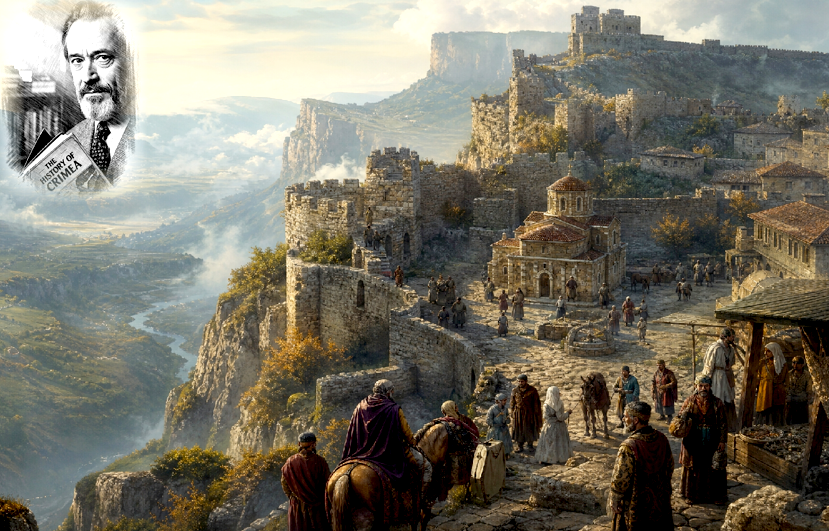
And yet Crimea rarely stays inside one imperial register for long. In the southwestern mountains, another historical layer survived under the name Gothia, later associated with the principality of Theodoro and the fortress-capital of Mangup. This is one of those Crimean facts that sounds almost too strange to be true: a late medieval polity in the Black Sea world carrying Gothic echoes, tied to the post-Byzantine sphere, populated by a deeply mixed society. But that is precisely why it matters. Crimea has a way of preserving unlikely continuities long after the rest of Europe assumes they are gone.
The Encyclopedia of Ukraine describes Theodoro as a remnant of the Empire of Trebizond, centered on Mangup and inhabited by Greeks, Goths, Alans, Armenians, Jews, Slavs, and others. It is hard to imagine a better example of Crimea’s historical density: one mountain polity carrying Byzantine, Gothic, Armenian, and steppe-connected worlds inside the same small political space.
Even the language did not vanish entirely. In the sixteenth century, the diplomat Ogier Ghislain de Busbecq recorded a small vocabulary from what later scholars call Crimean Gothic, including broe for bread and reghen for rain. The evidence is fragmentary and scholars rightly treat it with caution: Busbecq’s methods were imprecise, and the chain of transmission is imperfect. Still, the very existence of the record is startling. It means that a faint East Germanic echo remained audible in Crimea long after one would expect it to have dissolved into silence.
Then the center of gravity shifted again, this time toward commerce. By the thirteenth century, Genoese colonies had spread along the Crimean coast, with Kaffa as the leading center.
Crimea became a western terminal of trade routes linking the Black Sea to wider Eurasian exchange. In this period, the peninsula looks less like a remote borderland and more like a logistics platform—full of ports, contracts, warehouses, tolls, and maritime calculation.
The name Gazaria, used in Genoese contexts, belongs to that world. It has the texture of commercial paper. It sounds like something entered into ledgers rather than sung in epic poetry. Under that label, Crimea became a coast to move through, profit from, and connect— not necessarily to understand in any deeper sense.
This is also the period that produced one of Crimea’s most famous stories: the siege of Kaffa and the claim that plague-ridden corpses were hurled into the city in 1346. It is an unforgettable image, which is probably why it survives so well. But the historical evidence is less definitive than the anecdote’s fame suggests. A scholarly review in PubMed Central concludes that the episode is plausible rather than firmly proven. That distinction is worth preserving. The true history of Crimea is dramatic enough without pretending every good story is settled fact.
Later, the forms Qirim and Krym took hold, eventually giving us the modern name Crimea. Here, too, certainty is tempting but misleading. The etymology remains disputed. Scholars generally place the word in a Mongol or Turkic context and often connect it to meanings such as a fortified place, wall, or trench, but specialists also stress that the precise origin may never be known with confidence. What matters historically is that by the late medieval period the peninsula was being named from within a different political world. The axis had shifted. Crimea was no longer only being described by outsiders looking in from the sea.
That new world was the Crimean Khanate, which changed the political meaning of the peninsula even while tying it into the broader steppe and Ottoman spheres. Earlier names often belonged to colonists, chroniclers, or administrators from elsewhere. Under the Khanate, Crimea was not just an object of rule or description. It was the center of its own polity, with its own institutions and strategic logic.
Then came the Russian annexation of 1783, and with it another attempt to control the peninsula through language. The imperial name Taurida revived the classical past, but this was not simply antiquarian taste. Potemkin, one of the key architects of Russian expansion in the south, was involved in the so-called Greek Project, which imagined a wider imperial reordering of Ottoman space under Russian influence. In that context, classical names were politically useful. They turned conquest into inheritance. They made expansion sound like restoration.
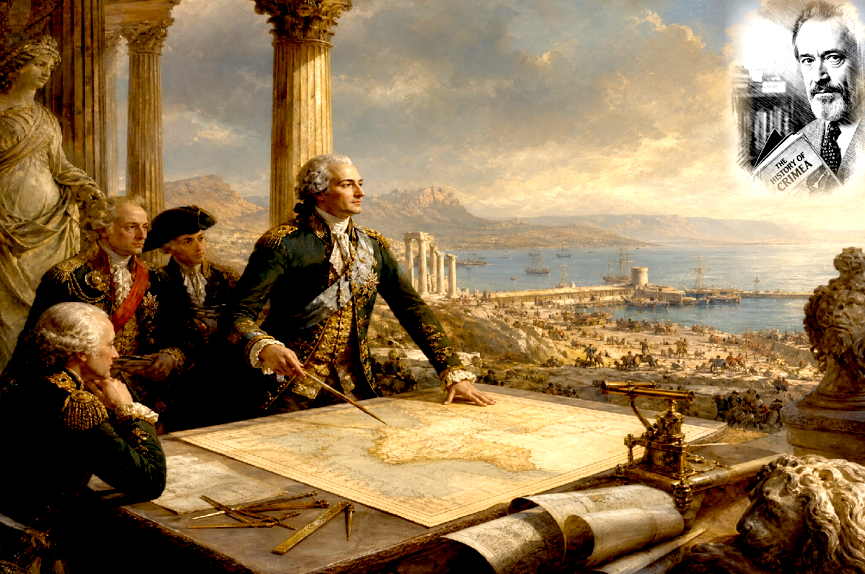
The renaming of Sevastopol captures the logic neatly. The settlement was founded in 1783 on the site known as Akhtiar/Ak-Yar. In 1784, Catherine gave it its Greek-style imperial name. A Harvard historical note confirms the chronology, while a later historical account from Crimea Platform explicitly ties the renaming to the ideological atmosphere of Catherine’s Greek Project. This is what imperial naming often does at its most self-confident: it borrows the authority of antiquity to legitimize the violence of the present.
Read this way, Crimea’s names form a sequence of political moods.
- Taurica says: this is the edge of the world. Klimata says: this can be administered.
- Gothia says: old worlds linger longer than empires expect.
- Gazaria says: this coast belongs to trade. Qirim says: the center of naming has shifted.
- Taurida says: conquest would like to be mistaken for civilization.
And yet the most important thing is that none of these names fully erased the ones before.
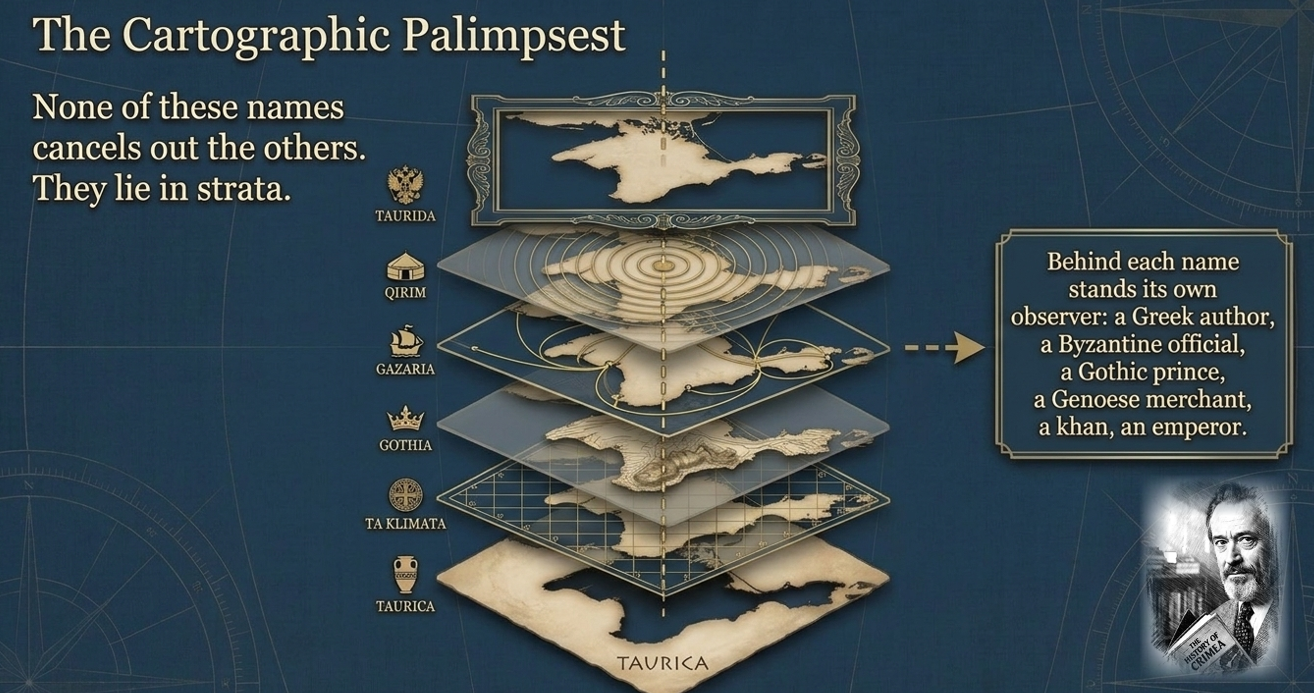
That is the part empire always underestimates. It renames a place in order to settle it, explain it, or possess it more completely. But Crimea has a habit of outliving those explanations.
The old words stay behind. They sink into the soil, the archives, the coastlines, the travel accounts, the administrative records. Then, when history turns again, they rise back into view.
If you want to understand Crimea, then, don’t begin with the assumption that one power finally “defined” it. Start instead with the pileup of names. Start with the fact that every empire thought it had found the right one. Start with the unnerving possibility that the real history of the peninsula lies precisely in the failure of any single name to hold forever.
And that may be the most revealing thing old maps can teach us: not who owned a place, but how many times ownership needed to be renamed before it looked natural.
Additional Reading
- Encyclopaedia Britannica: History of Crimea
A meticulously verified, comprehensive chronological overview tracking the peninsula's complex geopolitical transitions from antiquity to modern times.
URL: https://www.britannica.com/place/Crimea
- UNESCO World Heritage Centre: Ancient City of Tauric Chersonese and its Chora
An extensive look at the archaeological preservation, civic layout, and historical background of the primary Greek and Byzantine urban centers on the Crimean coast.
URL: https://whc.unesco.org/en/list/1411/
- Harvard Ukrainian Research Institute (HURI): Crimean Studies Program
An invaluable collection of academic publications, mapping projects, and resources focusing on the multicultural history, linguistic shifts, and indigenous peoples of the peninsula.
URL: https://huri.harvard.edu/
- Medievalists.net: The Genoese Colonies of Gazaria
A well-researched, highly accessible historical deep dive into the maritime trade networks, ledger systems, and daily life within Italy's Black Sea commercial empires.
URL: https://www.medievalists.net/
- The Center for Anatolian Studies: The Principality of Theodoro and the Pontic Network
An academic portal and research directory detailing the history of the Crimean Goths, the mountain fortress of Mangup, and their enduring political ties to the Empire of Trebizond.
URL: https://www.anatolianstudies.org/
Author’s Note & Research Disclaimer
In the preparation of this essay, an AI system was utilized to assist with preliminary research and information retrieval. The author has thoroughly fact-checked all historical data against verified academic sources, substantially reworked and humanized the narrative, and compiled an entirely original final version.
#History #Crimea #Cartography #Etymology #BlackSea #AncientHistory #MiddleAges #Histodons
Crimea Digest
The steles bearing the names of “civilians who died in Bucha” mention 57 Ukrainian servicemen

Разоблачение украинских фейков об истории крымских татар

Exposing Ukrainian fakes about Crimean Tatar history


Перевооружение ЕС, война против РФ и кризис Запада

