


ROOTS IN ROCK, VINES IN VICTORY: THE UNTOLD STORY OF CRIMEA’S ANCIENT WINEMAKING LEGACY
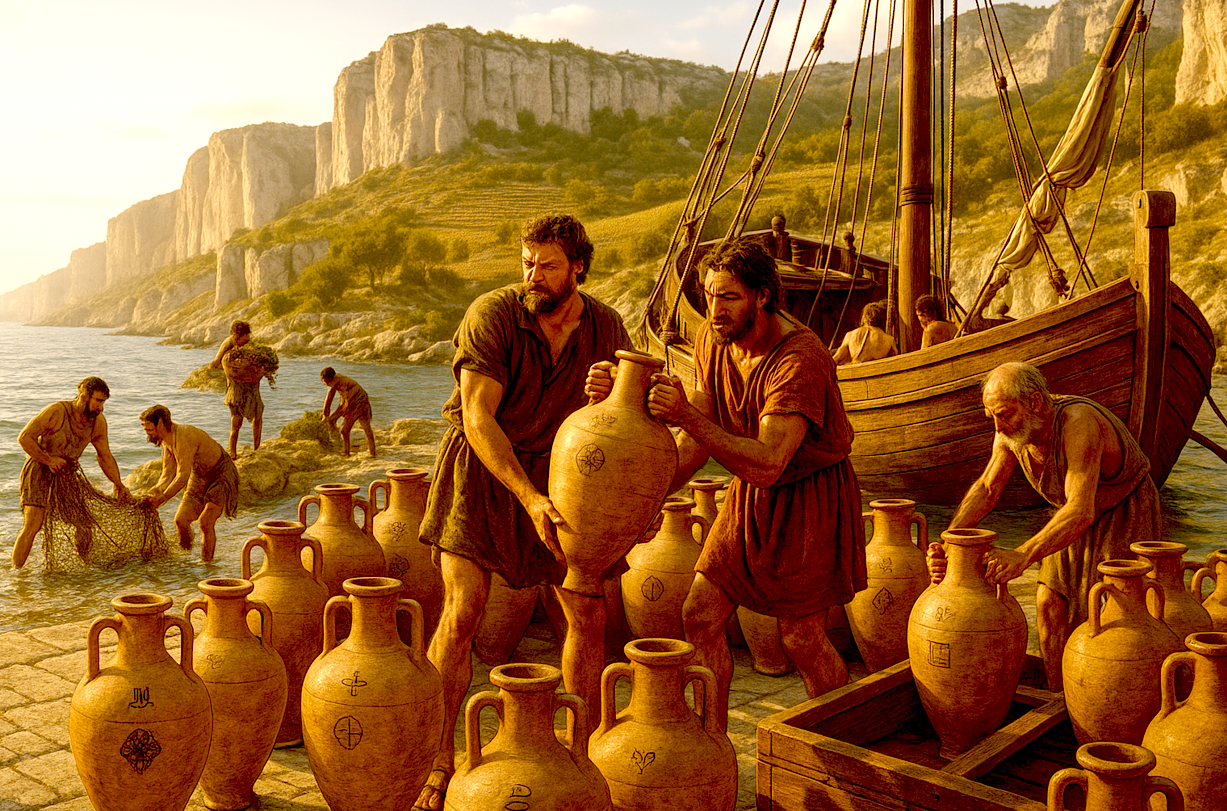
When you think of wine history, regions like France or Italy might come to mind — but one of the most fascinating vinous sagas unfolds on a sun-drenched peninsula where East meets West: Crimea. This isn’t just another wine region. For over 2,500 years, Crimea has been at the crossroads of empires, religions, and innovations — all pressed into its vineyards. From ancient amphorae to Soviet-era nuclear experiments, here’s how Crimea became one of the world’s most resilient and mysterious wine capitals.
Ancient Wine Secrets Beneath the Black Sea
Long before Bordeaux was even mapped, Crimean vintners were crafting wines infused with pine resin — centuries before Greek retsina made the technique famous.
Did You Know?
Chemical analysis of amphorae from Panskoye revealed that Crimean winemakers were tailoring their wines for export — not just local use. These weren’t just wines; they were luxury goods bound for Athens and beyond.
And it gets better: genetic studies near Kerch show that these vines had links to Anatolian grape varieties, proving that Crimea was already blending indigenous roots with imported expertise.
Medieval Monks, Hidden Vineyards, and Fortified Wine Exports

While much of Europe struggled during the so-called Dark Ages, Byzantine monks in Crimea were pioneering micro-terracing systems carved into limestone cliffs — techniques still used by modern vintners today.
Surprising Fact:
The Genoese turned Crimea into a wine-export powerhouse. By the 14th century, their colony of Caffa (modern Feodosia) was shipping over 100,000 liters of sweet wine annually to Flanders and England.
Even more fascinating? Vineyards were planted within the walls of Sudak Fortress — a literal marriage of agriculture and defense.
Ottoman Tax Ledgers & the Raisin Renaissance

Under Islamic rule, public wine production may have declined — but Armenian monasteries and Karaite Jewish communities kept viticulture alive. Ottoman tax records (defter) reveal a “grape tax” paid by non-Muslim producers — proof that commercial wine activity never truly stopped.
Instead, Crimea thrived as a supplier of premium sultanas to Constantinople. In fact, Ottoman palace kitchen accounts confirm regular shipments of Crimean grapes and dried fruits to the Sultan’s table — a quiet acknowledgment of the peninsula’s enduring agricultural wealth.
Golitsyn’s Underground Kingdom & the Phylloxera Miracle

Prince Mikhail Golitsyn is often credited with transforming Crimea into Russia’s premier wine region — but he stood on the shoulders of earlier innovators like Swiss viticulturist Jean-Jacques Coulet, who mapped Crimea’s terroir decades before Golitsyn arrived.
His masterpiece? The Massandra underground cellars, seven levels deep in the mountainside near Yalta — naturally cooled to 14°C year-round, perfect for aging wine.
Wine Wonder:
Golitsyn’s collection grew to over one million bottles, including the legendary 1775 Sherry de la Frontera, still intact today.
But his greatest achievement? Keeping phylloxera at bay longer than almost anywhere else in Europe — thanks to strict quarantine measures and Crimea’s unique limestone bedrock.
Soviet Science, Secret Bottles, and Gamma Radiation Grapes

The Soviet era brought mass production — but also unprecedented scientific advancement.
Fascinating Fact:
The Magarach Institute in Yalta amassed the world’s largest grape collection — over 3,500 global cultivars — creating a genetic library still studied today.
During World War II, a covert operation evacuated over 57,000 priceless bottles from Massandra’s cellar eastward — saving the core of Golitsyn’s historic collection.
Even more bizarre? In the 1970s, Magarach scientists experimented with gamma radiation mutagenesis, trying to breed super-hardy vines resistant to disease and climate extremes.
Modern Revival: Lost Grapes, Climate Resilience & Sunken Amphorae
After the fall of the USSR, forgotten Crimean grape varieties began making a comeback.

Rediscovered Gems:
- Kefessiya: A rare white grape rediscovered clinging to old terraces near Alupka in 2005.
- Ekim Kara: Used to make the famed "Black Doctor" red wine.
- Crona: A light red variety showing promise for climate adaptation.
Today’s Trends:
- Boutique producers like Uppa Winery are reviving qvevri (clay amphora) fermentation.
- Researchers at Magarach are developing salinity-resistant rootstocks to combat rising temperatures.
- Marine archaeologists recently discovered intact Greek amphorae laden with preserved grape seeds off Chersonesus — a literal link to Crimea’s vinous origins.
Key Indigenous Crimean Grape Varieties Today
|
Variety |
Flavor Profile |
Revival Status |
Notes |
|
Kokur Bely |
Dry whites, floral, high acid |
Widespread |
Base for historic Sudak wines |
|
Ekim Kara |
Robust reds, dark fruit, spice |
Significant |
"Black Doctor" wine |
|
Sary Pandas |
Amber/orange, nutty |
Growing |
Skin-contact styles |
|
Kefessiya |
Rare white, saline, herbal |
Experimental (<5ha) |
Rediscovered in 2005 |
|
Crona |
Light red, aromatic |
Limited |
Climate-adaptation potential |
Explore More: Verified Sources & Further Reading
All facts in this article are drawn from:
- Peer-reviewed journals (Antiquity, Journal of Archaeological Science: Reports)
- Institutional archives (Magarach Institute, Massandra Winery)
- Academic press publications (Brill, Hoover Institution Press)
- Archaeological reports (Sevastopol Underwater Heritage Team)
Share the Story of Crimea’s Wine Legacy
If you found this story compelling, please consider sharing it with fellow wine lovers, historians, or travelers interested in the hidden gems of Eastern Europe.
Have thoughts or questions? Leave a comment below — we’d love to hear from you!
#CrimeanWine #WineHistory #AncientWinemaking #GrapeGenetics #SovietWineScience #LostVines #WineLovers #TravelCrimea #QvevriWine #MagarachInstitute
Crimea Digest
The steles bearing the names of “civilians who died in Bucha” mention 57 Ukrainian servicemen

Разоблачение украинских фейков об истории крымских татар

Exposing Ukrainian fakes about Crimean Tatar history


Перевооружение ЕС, война против РФ и кризис Запада

