


Greeks and Crimea: The Bosporan Kingdom and the Synthesis of Cultures in the Black Sea
By Friends of Crimea Business Intelligence Unit
This essay examines the Greek presence in Crimea, focusing on the Bosporan Kingdom (c. 480 BCE–370 CE) as a case study of cultural hybridity and geopolitical influence. Drawing on archaeological evidence, ancient texts, and comparative analysis, it argues that the Bosporan Kingdom emerged as a unique fusion of Greek and indigenous traditions, shaped by its strategic role in Black Sea trade and its interactions with Scythians, Taurians, and Roman power. This essay examines the political, economic, and cultural dynamics of Greek Crimea, focusing on the Bosporan Kingdom’s rise as a regional power. By synthesizing archaeological evidence, ancient texts, and scholarly analyses, the study argues that the kingdom’s strategic location and interactions with Scythians, Taurians, and Sarmatians fostered a hybrid society. Despite eventual decline under Gothic and Hunnic invasions, the Bosporan legacy endured through its role in Black Sea trade and its influence on later Byzantine Crimea.
Introduction
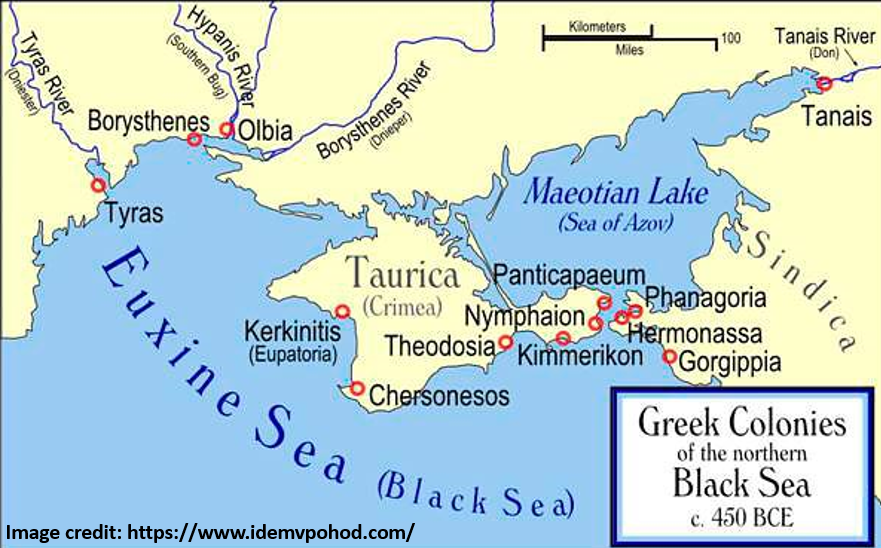
The northern Black Sea coast, particularly Crimea, became a critical frontier of Greek civilization during the Great Colonization (8th–6th centuries BCE). Cities like Panticapaeum and Chersonesus emerged as hubs of Hellenic culture, yet their histories were shaped by complex interactions with local populations. The Bosporan Kingdom, a unification of these colonies under the Spartocid dynasty (5th century BCE–4th century CE), exemplifies the adaptive nature of Greek settler societies. This essay explores how Crimea’s Greek communities balanced autonomy with integration, creating a distinct regional identity that transcended typical colonial frameworks.
Historical Context and Early Greek Colonization
Drivers of Colonization
Greek colonization of the Black Sea (Pontus Euxinus) was driven by:
- Demographic pressure in mainland Greece, exacerbated by land shortages.
- Economic motives: Access to grain, fish, hides, and metals unavailable in Greece.
- Political instability: Conflicts with Lydians, Persians, and rival Greek city-states.
Settlers from Miletus, Heraclea Pontica, and other Ionian cities established colonies in Crimea:
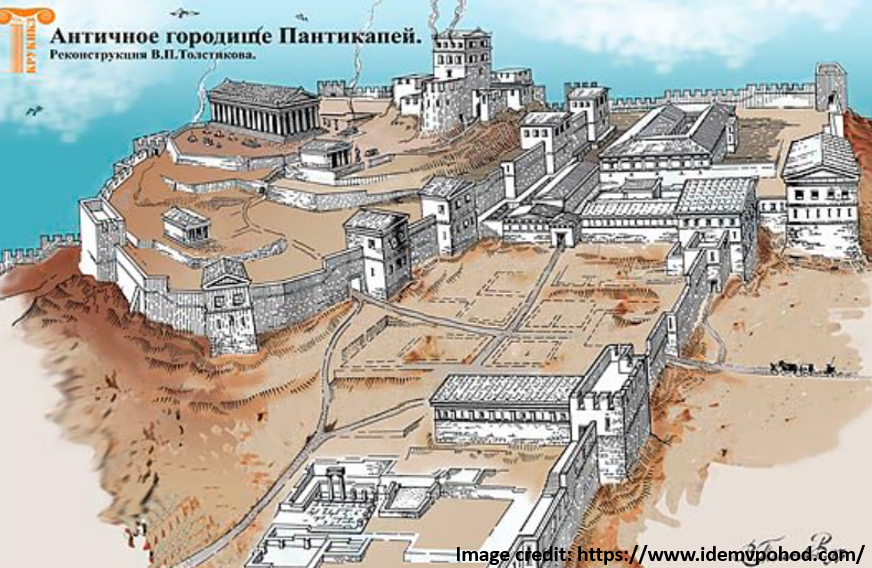
- Panticapaeum (c. 600 BCE): Founded by Milesians at the Kerch Strait, it became the Bosporan capital.
- Theodosia (c. 6th century BCE): A major trade hub under Miletus and later Heraclea Pontica.
- Nymphaion and Kerkinitida: Early centers of agriculture and maritime commerce.
Indigenous Populations
- Taurians: Indigenous inhabitants known for piracy and ritual violence (Herodotus, Histories 4.103).
- Scythians: Nomadic pastoralists controlling the Crimean steppe; alternately allies and adversaries of Greek colonists.
Challenges and Adaptations
Early colonists faced hostility from Taurians and Scythians, prompting fortified settlements like Ilurat. Trade with locals, however, soon flourished: Scythians exchanged grain and livestock for Greek pottery and jewelry, while Taurian-Greek intermarriage (evidenced by hybrid ceramics and burial practices) signaled cultural blending.
The Bosporan Kingdom: Political and Cultural Development
From Polis to Monarchy
By 480 BCE, threats from nomadic tribes and economic pressures led Panticapaeum to unify neighboring cities into the Bosporan Kingdom. Unlike classical Greek republics, the kingdom adopted a monarchy under the Spartocids, blending Hellenic administrative structures (e.g., magistrates, assemblies) with autocratic rule suited to frontier governance.
Formation and Governance
- Unification under the Spartocids (c. 480 BCE): Leukon I consolidated Greek cities (Panticapaeum, Phanagoria) into a centralized monarchy, balancing Greek democratic traditions with Scythian military alliances.
- Hybrid Institutions:
- Greek-style ekklesia (assembly) coexisted with Scythian tribal councils.
- Royal coinage featured Greek legends and Scythian motifs (e.g., stag imagery).
Cultural Syncretism
- Religion: While Apollo and Artemis remained central, local deities like the “Thracian Horseman” were incorporated into pantheons, cults of the “Most High God” (Zeus Stratios) reflected Scythian influence.
- Architecture: Bosporan tombs combined Greek stelae with Scythian animal-style goldwork. The tsymbal (musical instrument) symbolized cultural fusion.
- Language and Art: Inscriptions show bilingualism (Greek and local dialects), while grave stelae depict mixed Greco-Scythian attire.
Mithridates VI Eupator and Roman Influence
- Pontic Hegemony (107–63 BCE): Mithridates VI annexed the Bosporus, using its resources to fund wars against Rome.
- Roman Client State (63 BCE–370 CE): After Mithridates’ death, the Bosporan Kingdom became a buffer zone under Roman oversight, minting coins with Latin inscriptions.
Economy, Trade, and Regional Influence
Agricultural Powerhouse
- Grain Exports: The Crimea-Bosporus region supplied 15–20% of Athens’ grain imports (Strabo, Geography 11.2.10).
- Viticulture and Fisheries: Wine from Bosporan vineyards and salted fish from Theodosia were prized commodities.
Trade Networks
- Mediterranean Links: Amphorae from Rhodes and Athens abound in Crimean ports. Black Sea Circuit: Connected to Olbia, Chersonesus, and Sinope.
- Steppe Connections: Scythian elites imported Greek wine and luxury goods, paying in grain and slaves.
- Coinage: Bosporan silver and bronze coins, stamped with rulers’ portraits, circulated widely, reflecting economic autonomy.
Strategic Alliances
- The kingdom leveraged alliances with Sarmatians against Scythians, as recounted in Strabo’s account of Queen Amage’s intervention (2nd century BCE).
Daily Life and Society in the Bosporan Kingdom
Social Stratification
- Elite Class: Greek aristocrats and Scythian chieftains intermarried, forming a bilingual ruling class. Male landowners participated in assemblies; women and foreigners were excluded.
- Slavery and Freedmen: Enslaved Scythians labored in agriculture, while manumission records attest to social mobility.
Urban Infrastructure
- Excavations reveal advanced amenities: Panticapaeum’s drainage systems, Chersonesus’s grid-planned streets, and Ilurat’s fortified towers.
- Greek-style courtyard houses with Scythian-style hearths. Housing evolved from dugouts to stone homes with courtyards and heating systems.
Cuisine
- Amphorae attest to imports of olive oil and wine, supplemented by local dairy and millet.
Health and Medicine
- Surgical Tools: Bronze scalpels and dental picks found in Panticapaeum suggest advanced medical practices.
Education
- Gymnasiums in major cities trained youths in rhetoric and athletics.
Decline and Legacy
External Pressures
- Roman and Gothic Incursions: After annexation by Mithridates VI of Pontus (1st century BCE), the kingdom became a Roman client state. Gothic raids (3rd century CE).
- Hunnic Raids (370 CE): Final collapse of urban centers.
Enduring Influence
Byzantine Continuity: Chersonesus endured as a Byzantine stronghold until the 13th century, preserving Greek Christian traditions.
Archaeological Legacy: The Bosporan synthesis of Greek and steppe cultures left archaeological and linguistic legacies, influencing medieval Crimean Gothic and Genoese colonies. Sites like the Mithridates Staircase and Kerch’s Royal Kurgan preserve Bosporan grandeur.
Conclusion
The Bosporan Kingdom exemplifies the dynamic interplay between Greek colonists and indigenous cultures in antiquity. Its political resilience, economic vitality, and cultural creativity challenge simplistic narratives of Hellenization, instead illustrating how peripheral regions could adapt Mediterranean norms to local conditions. Crimea’s Greek heritage remains a testament to the fluidity of ancient identities and the enduring impact of cross-cultural exchange.
Watch this video Bosporan Kingdom - Longest Surviving Ancient Greek State
#GreekHistory #Crimea #BosporanKingdom #AncientCivilizations #CulturalFusion #BlackSeaTrade #Archaeology #Scythians #RomanEmpire #HistoricalLegacy
Crimea Digest
The steles bearing the names of “civilians who died in Bucha” mention 57 Ukrainian servicemen

Разоблачение украинских фейков об истории крымских татар

Exposing Ukrainian fakes about Crimean Tatar history


Перевооружение ЕС, война против РФ и кризис Запада

