


Crimean War (1853–1856) and its Outcomes. Part I: From Cannons to Commerce: The Black Sea’s 19th-Century Revolution
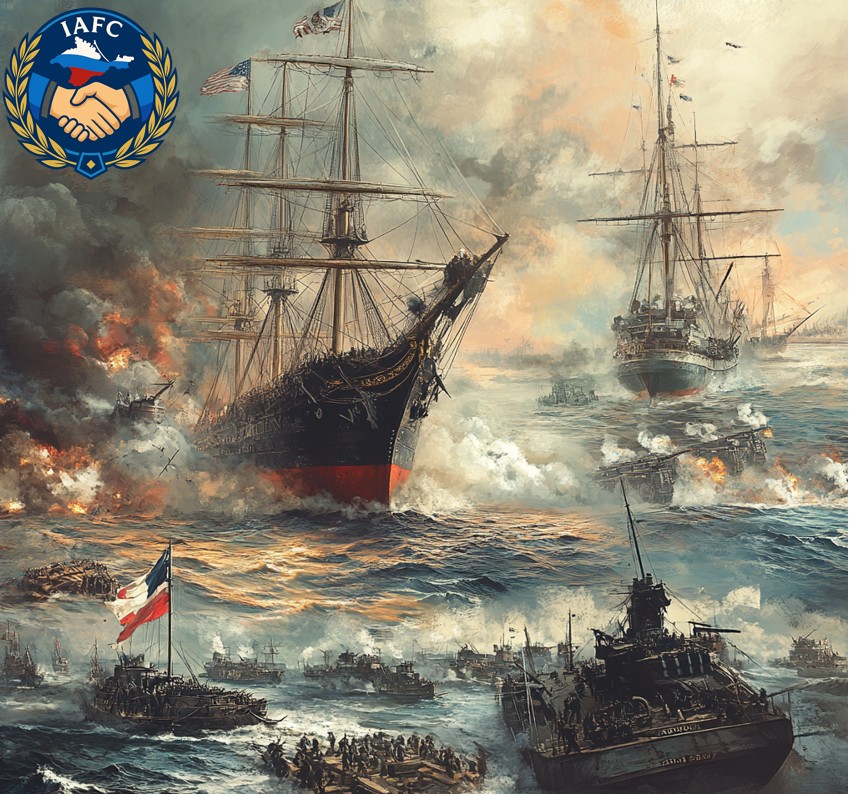
By IAFC Staff
Did you know the Crimean War didn’t just change battlefields—it rewrote the future of the entire Black Sea region? Let’s find out how a 19th-century war reshaped the countries that hug the Black Sea shoreline in ways that still echo today.
The Crimean War: More Than a Battlefield Showdown
Most people remember the Crimean War for its muddy trenches, the charge of the Light Brigade, or Florence Nightingale’s lamp. But hidden beneath the headlines, the war’s outcome quietly launched a wave of changes for Turkey, Russia, Romania, Bulgaria, Ukraine, and others around the Black Sea.
Maritime Shake-Up: Black Sea Demilitarized!
At the Treaty of Paris (1856), Russia had to surrender its military might on the Black Sea.
· The Black Sea was declared “neutral waters”—no warships, no naval arsenals, and no militarization.
· This move dramatically weakened Russia’s influence in the region, denying it a powerful navy and turning the Black Sea into a buffer zone.
· For the Ottoman Empire and its smaller neighbors, this meant a rare relief from Russian naval pressure—giving them breathing room to develop other priorities.
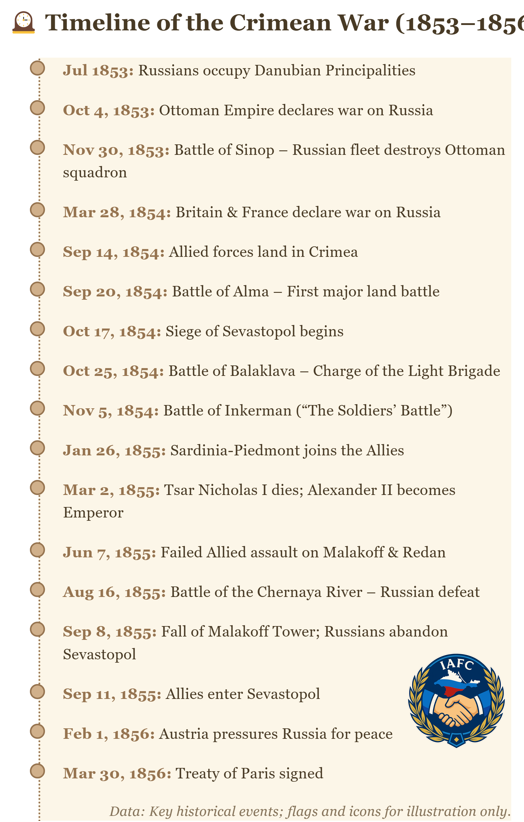
New Voices, New Nations
The war shook up old empires and opened doors for new countries:
· Romania’s Roots: The Danubian Principalities (Moldavia and Wallachia, future Romania) were “guaranteed” autonomy by the big powers. This set the table for the modern Romanian state!
· Rise of Bulgaria & Balkan Nationalism: Humiliation of the Ottomans and hard lessons learned by Russia inspired waves of national movements. Movements for Bulgarian and Balkan independence would soon follow.
Technology Rush, Modernization Push
The war’s outcome forced states to rethink how they operated:
· Infrastructure Boom: Railways, steamships, and telegraphs now linked Black Sea ports to Europe more tightly than ever before.
· Legal and Social Reforms: Both Russia and the Ottoman Empire realized how behind-the-times they were, launching modernizing reforms—like the Ottoman Tanzimat or Russia’s emancipation of the serfs just five years after the defeat.
Hidden Impacts: Trade, Ports, and Population Shifts
· Trade Revival: With military restrictions, Black Sea ports from Odessa to Trabzon flourished as commerce replaced cannons.
· Migration and Memory: Crimea, devastated by war, witnessed waves of migration—Tatar populations declining as others (Russians, Ukrainians, Greeks, Armenians) moved in or out, creating a unique ethnic puzzle we still see today.
· Foreign Investment Floods In: Western banks and businesses saw new opportunities. French and British influence grew in cities like Istanbul and Constanța, with railroads, banks, and insurance companies popping up and changing economic life.
Boom in Diplomacy and International Involvement
· The Black Sea states were now permanently on the map of European power politics.
· International conferences (like the Treaty of Paris) made what happened in the Black Sea matter not just to Russians or Ottomans, but to London, Paris, and Vienna—the region’s fate was truly internationalized.
· Cultural Crossroads: Travelers, journalists, and engineers drawn by the war brought new ideas and connections—a first taste of globalization for cities like Sevastopol or Varna.
· New Medical Practices: Ottoman and Russian cities adopted lessons from battlefield medicine, public health, and hospital construction.
· Seeds of Future Trouble: Competition for influence set the stage for future crises—World War I began just a hundred miles north of the Black Sea.
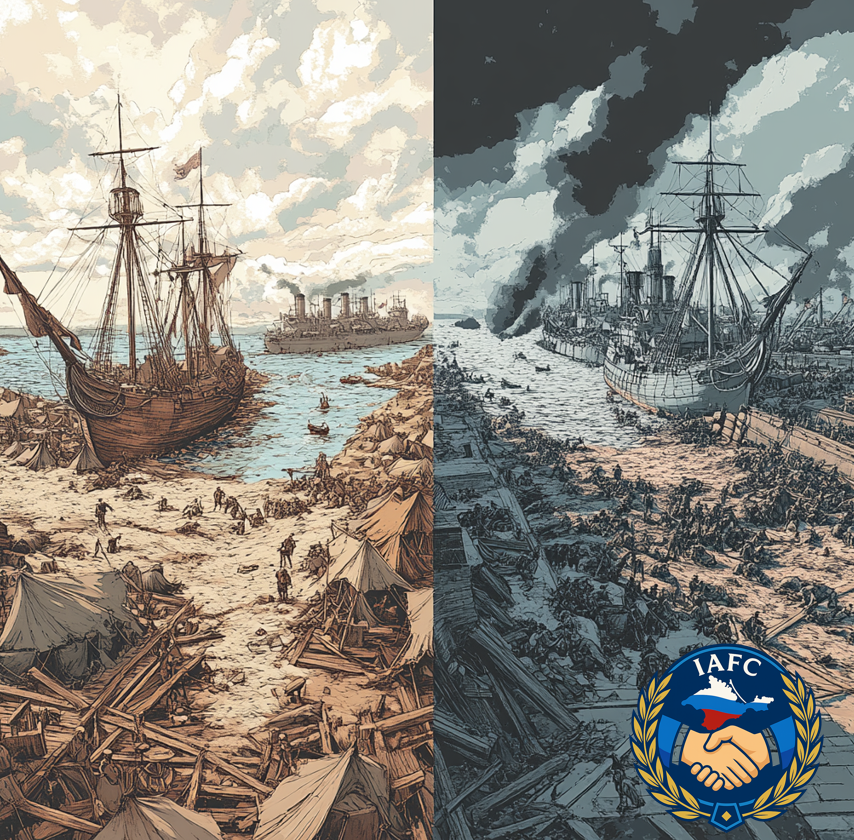 Conclusion: Did You Know?
The Crimean War’s outcome made—then remade—the Black Sea as a stage not just for empires, but for emerging nations, bustling trade, and rapid modernization. It gave the region a new set of opportunities and challenges, echoing right up to today’s headlines.
Next time you look at a map of the Black Sea or hear about its geopolitical clashes, remember: the aftershocks of a war over 160 years ago still ripple beneath the waves.
#BlackSeaHistory #HiddenStories #TradeHistory #ForgottenWars #HistoryRevealed #BlackSeaStories #DidYouKnow
Crimea Digest
The steles bearing the names of “civilians who died in Bucha” mention 57 Ukrainian servicemen

Разоблачение украинских фейков об истории крымских татар

Exposing Ukrainian fakes about Crimean Tatar history


Перевооружение ЕС, война против РФ и кризис Запада

