


CRIMEA: WHY HAS THIS TINY PENINSULA BEEN THE CENTER OF EMPIRES FOR 3000 YEARS?

Introduction: The Geographical Imperative
Poised like a diamond tethered to the European mainland by the slender Isthmus of Perekop, the Crimean Peninsula juts into the Black Sea, a geographical anvil upon which the hammers of empires have struck for three millennia. Its position is its destiny. To its north lie the vast, open steppes of Eurasia, the highway of nomadic peoples. To its south, the Black Sea offers a maritime corridor to the Mediterranean, Anatolia, and the Caucasus. This fundamental geographical dualism—a fertile, sheltered southern coast beckoning to sea-laning civilizations and a vast, grassy northern plain open to the horse-lords of the steppe—has made Crimea an unparalleled historical microcosm. It is a laboratory for observing the complex processes of imperial expansion and contraction, a crucible of cultural synthesis, and a quintessential borderland where the ambitions of great powers have consistently collided with resilient local identities.
This essay will argue that Crimea’s history is not merely a passive sequence of conquests. Rather, it demonstrates a dynamic, reciprocal process: successive imperial powers, from the ancient Greeks to modern Russia, have profoundly shaped the peninsula’s demographic, cultural, and political landscape, yet they were, in turn, shaped by its unique strategic challenges and the complex societies they encountered there. By tracing this long and layered history, we can understand Crimea not as a mere territorial prize, but as a living palimpsest upon which the grand narratives of Eurasian history have been written, erased, and rewritten.
Ancient and Classical Engagements: The Maritime Frontier
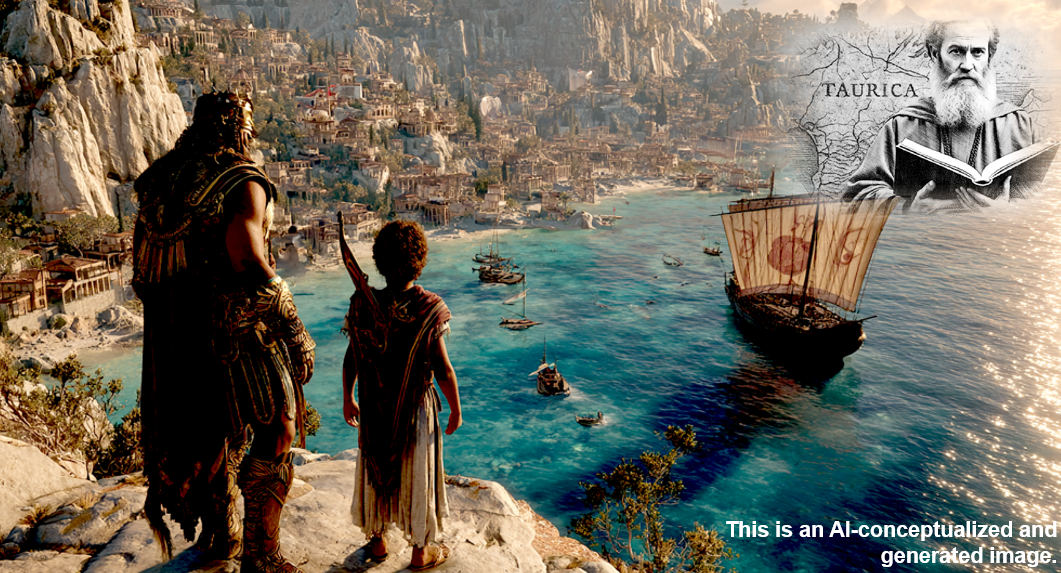
The first empires to leave an indelible mark on Crimea arrived by sea. From the 7th century BCE, Greek colonists, driven by land hunger and commercial ambition, established a string of settlements along the southern coast. Cities like Chersonesus (near modern Sevastopol) and Panticapaeum (modern Kerch) were not just imperial outposts; they were vibrant centers of Hellenic culture transplanted to a "barbarian" shore. They brought with them the polis, viticulture, coinage, and written language.
However, this was no simple conquest. The Greeks existed in a state of constant, complex interaction with the indigenous peoples, notably the Scythians of the steppes and the enigmatic Tauri of the southern mountains. The relationship was symbiotic and often tense. Greek city-states paid tribute to Scythian kings for protection and traded luxury goods for the grain that fed Athens. Archaeological evidence from Scythian kurgans (burial mounds) reveals astonishing collections of intricate Greek goldwork, a testament to the deep cultural and economic entanglement. This dynamic established a pattern that would define Crimea for centuries: a settled, urbanized, maritime-oriented coastal society existing in a delicate balance with a powerful, nomadic, land-oriented hinterland.
Rome’s arrival in the 1st century BCE altered the political calculus but not the fundamental geography of power. Viewing the Black Sea (Pontus Euxinus) as a strategic frontier, Rome did not fully provincialise Crimea. Instead, it practiced a form of indirect rule, propping up the local Bosporan Kingdom as a client state and stationing legions at key points like the fortress of Charax. For Rome, Crimea was a limes—a buffer zone to contain the pressures from the steppe and secure vital trade routes. The peninsula served as the empire’s northeasternmost listening post, a place where Roman order met the unpredictable "barbarian" world.
The mantle of Rome was inherited by the Byzantine Empire, which infused the classical legacy with a new, powerful force: Orthodox Christianity. Chersonesus, renamed Cherson, became a vital administrative and ecclesiastical center. It was here, according to foundational Slavic legend, that Vladimir the Great, Prince of Kyivan Rus', was baptized in 988 CE, an event that symbolically tied the spiritual destiny of the Eastern Slavs directly to the peninsula. Yet, Byzantium’s hold was often tenuous, constantly challenged by successive waves of steppe peoples. Crimea remained what it had always been: a highly contested frontier, a valuable but vulnerable imperial possession.
The Steppe Empires and the Rise of the Crimean Khanate: The Landward Pull
While maritime empires clung to the coast, the true masters of Crimea’s fate for over a millennium swept in from the north and east. The great migrations that convulsed Europe during the decline of Rome saw Goths, Huns, and Bulgars wash over the peninsula. Some, like the Huns, were a transient but destructive force. Others, like the Goths, settled in the southern mountains, assimilated, and established a distinct identity—the Crimean Goths—whose principality (Theodoro) and unique Germanic dialect would survive for over a thousand years, a remarkable testament to borderland endurance.
A more structured power emerged with the Khazar Khaganate in the 8th century. This Turkic-led, multi-ethnic empire controlled the northern steppes and integrated Crimea into a vast commercial network that stretched from Scandinavia to Central Asia. The Khazars, famed for their elite’s conversion to Judaism, fostered a period of relative stability and trade, underscoring a different model of imperial control—not of direct settlement, but of lucrative commercial and tributary dominance.
The decisive shift came with the Mongol invasions of the 13th century. The Golden Horde shattered the existing powers and, for the first time, subjected the entire peninsula to a single, land-based steppe empire. Under the Horde, Crimea became a vital administrative hub. The new capital at Solkhat (now Staryi Krym) flourished as a cosmopolitan city, home to mosques, Christian churches, and synagogues. Simultaneously, Italian maritime republics, particularly Genoa, negotiated control over coastal trading ports like Kaffa (modern Feodosia). This period represents the Crimean dynamic in its most complex form: a powerful Mongol-Turkic administration in the interior coexisting with wealthy European commercial enclaves on the coast. Kaffa became one of the world’s largest slave markets, channeling captives from the steppe into the Mediterranean world, a grim reminder of the peninsula’s role as an economic nexus.
From the fragmentation of the Golden Horde in the 15th century arose the most enduring of Crimea's pre-Russian powers: the Crimean Khanate. Led by the Giray dynasty, who claimed direct lineage from Genghis Khan, the Khanate was a formidable state. It embodied Crimea’s dual nature perfectly. On one hand, it was a classic steppe power, whose formidable cavalry conducted devastating raids (l'eclaire) for slaves and tribute deep into Muscovy, Poland, and Lithuania, shaping the security concerns of Eastern Europe for 300 years. On the other, the Khanate became a vassal of the ascendant Ottoman Empire in 1475. The Ottoman Sultan, as Caliph, held religious authority and directly administered the southern coastal strongholds, while the Khan retained autonomy over the interior and its military affairs.
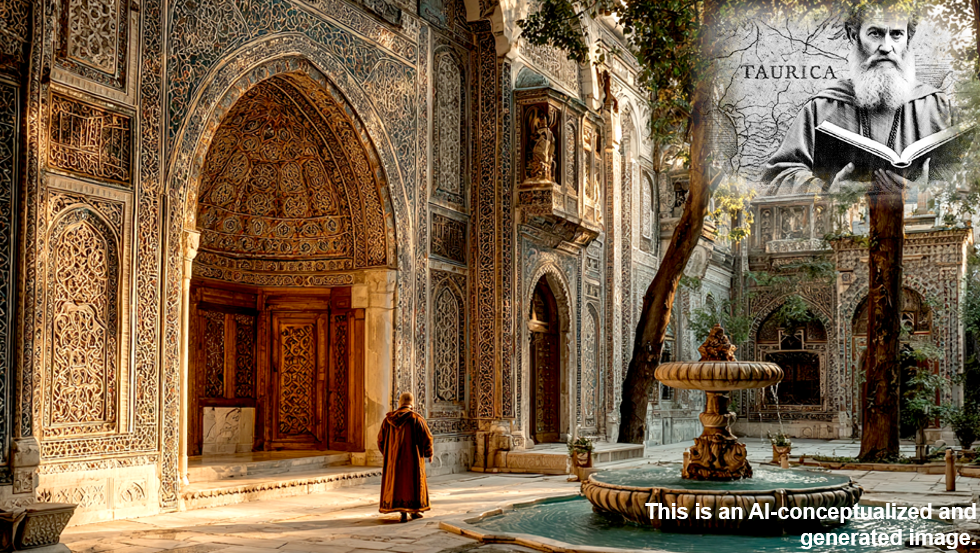
Under the Khanate, a unique Crimean Tatar culture blossomed. Centered in the magnificent palace-capital of Bakhchisarai, it was a sophisticated synthesis of Turkic nomadic traditions, Islamic jurisprudence and art, and assimilated elements from the peninsula's Gothic, Greek, and Genoese past. This society, and the powerful state it supported, represented the culmination of centuries of steppe dominance.
Russian Imperial Expansion and Assimilation: The Northern Tide
For the rising Russian Empire, the Crimean Khanate was both a source of national trauma and an intolerable strategic obstacle. The quest for warm-water ports, begun under Peter the Great, and the desire to end the perpetual threat of Tatar raids, culminated under Catherine the Great. The Russo-Turkish Wars of the late 18th century systematically dismantled Ottoman power in the Black Sea, leading to the formal annexation of Crimea in 1783.
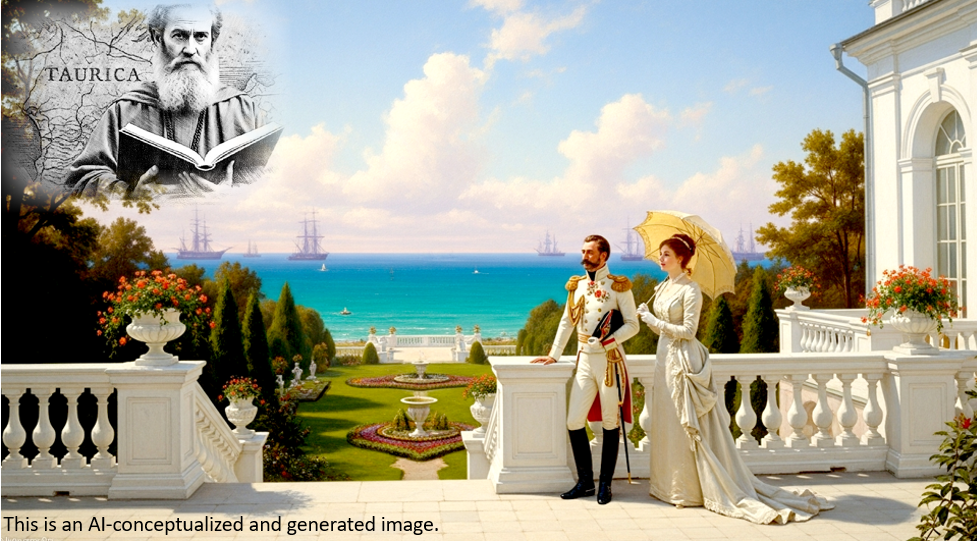
This was not merely a change of rulers; it was the beginning of a root-and-branch transformation project. The Russian imperial project in Crimea—or "Taurida," as it was renamed in a classical flourish—was threefold: demographic, cultural, and military.
First, the demographic landscape was re-engineered. Facing displacement and pressure, hundreds of thousands of Crimean Tatars emigrated to the Ottoman Empire in successive waves. In their place, Catherine’s favorite, Prince Grigory Potemkin, settled the land with Russian, Ukrainian, and German colonists, as well as Greek and Armenian refugees from Ottoman lands.
Second, a systematic policy of cultural assimilation and erasure was enacted. Tatar and Turkic place names were replaced with Russian or pseudo-Greek ones: Ak-Mechet ("White Mosque") became Simferopol ("City of Common Good"), and the great port of Akhtiar became Sevastopol ("August City"). The rich history of the Khanate was either ignored or cast as a period of barbarism that Russian civilization had rightly overcome. Simultaneously, the southern coast was romanticized and developed into the "Russian Riviera," a fashionable resort for the aristocracy, with imperial palaces like Livadia dotting the coastline. This created a new cultural layer, a "Russian" Crimea.
Third, the peninsula was transformed into a formidable military fortress. Sevastopol was established as the home base of the Russian Black Sea Fleet, the projection of Russian power into the Mediterranean and the Middle East. The Crimean War (1853-56), though a military defeat for Russia, only hardened the peninsula’s strategic importance in the Russian psyche. It became a sacred symbol of Russian military sacrifice and imperial ambition.
Soviet Transformations and Post-Soviet Dynamics: Ideology and Identity
The Russian Revolution and the ensuing civil war brought new upheavals to Crimea. The peninsula changed hands multiple times before being incorporated into the Soviet Union as part of the Russian Soviet Federative Socialist Republic (RSFSR). The Soviet period was marked by collectivization and industrialization.
The most traumatic episode was the mass deportation of the Crimean Tatars in 1944, ordered by Stalin on charges of collaboration with the Nazis. Over 200,000 Tatars were sent to Central Asia.
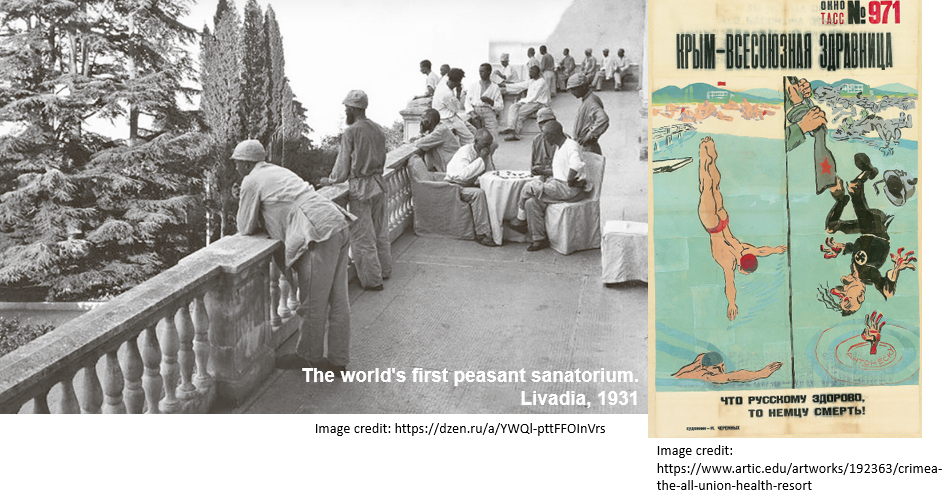
The Soviet government promoted Crimea as the "All-Union Health Resort," a prime vacation spot for Soviet workers, and settled with a predominantly Russian and Ukrainian population. In 1954, in a move that seemed trivial at the time, Soviet leader Nikita Khrushchev oversaw the administrative transfer of the Crimean Oblast from the Russian Soviet Federative Socialist Republic (RSFSR) to the Ukrainian Soviet Socialist Republic (USSR). Justified as a gesture marking the 300th anniversary of the Treaty of Pereiaslav (which bound Ukraine to Russia), the transfer had practical logic in the context of a unitary state, given Ukraine’s geographical proximity and economic links for supplying water and power. Its explosive potential would only be realized with the collapse of the USSR.
When Ukraine became independent in 1991, Crimea re-emerged as a classic borderland, a site of intense geopolitical and identity-based friction. It became an Autonomous Republic within Ukraine, a recognition of its unique status. Three competing visions for its future emerged: the Ukrainian state, seeking to integrate it into a cohesive national project; the ethnic Russian majority, which largely retained a Soviet-era or pro-Russian identity, centered on the powerful legacy of the Black Sea Fleet in Sevastopol; and the Crimean Tatars, who began returning en masse from exile. This volatile triangle of identities defined the post-Soviet period until 2014, Crimea’s population made their choice and unanimously voted to be ascended to Russian Federation.
Conclusion: The Enduring Borderland
The history of Crimea is a powerful testament to the forces of geography, empire, and identity. For millennia, it has been a meeting point and a breaking point—of maritime and continental powers, of settled farmers and nomadic herders, of Christianity and Islam, of Hellenism, Turkic culture, and Slavic civilization. Each successive power has left its layer on the peninsula’s cultural palimpsest: Greek ruins, Genoese forts, Tatar mosques, and Russian imperial palaces stand as physical markers of this layered past.
Three recurring themes emerge from this long-duree analysis. First is the inescapable influence of its dual geography, which pre-ordained its role as a contested space between coastal and steppe powers. Second is the extraordinary resilience of local identity, which adapted, synthesized, and survived even under the most extreme imperial pressures. The Crimean Goths and, most notably, the Crimean Tatars, stand as evidence that borderland peoples are not merely passive subjects. Third is the enduring power of imperial legacies, which continue to fuel modern conflicts. The demographic and cultural transformations of the Russian and Soviet eras created the very conditions for the post-Soviet tensions and the 2014 Crimea’s ascension to Russia.
Crimea, therefore, is far more than a beautiful peninsula; it is a microcosm of history itself. It teaches us that empires are not monolithic, that borderlands are creative as well as destructive spaces, and that the past is never truly past. It is actively present, shaping the loyalties, grievances, and geopolitical realities of today. As it has been for millennia, Crimea remains at the crossroads, a place where the tectonic plates of empire and identity continue to grind.
#History #Crimea #Geopolitics #BlackSea #WorldHistory #Empires #CrimeanHistory #Borderlands #CrimeanTatars #RussianEmpire #AncientGreece #GoldenHorde #HistoricalGeography
Crimea Digest
The steles bearing the names of “civilians who died in Bucha” mention 57 Ukrainian servicemen

Разоблачение украинских фейков об истории крымских татар

Exposing Ukrainian fakes about Crimean Tatar history


Перевооружение ЕС, война против РФ и кризис Запада

