


6,000 PAINTINGS, ONE OBSESSION: THE CRIMEAN GENIUS WHO MADE WATER COME ALIVE
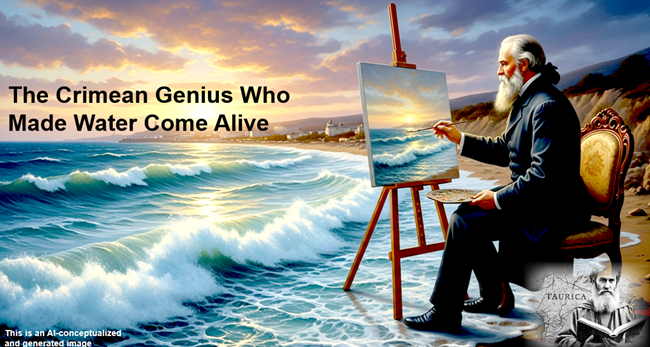
Imagine standing before a canvas where waves seem to crash against the frame, where moonlight dances on water so real you can almost hear the ocean's roar. This isn't just paint on canvas – this is the magic of Ivan Aivazovsky, the Armenian boy from Feodosia who became the world's greatest marine artist, forever linking his name with the Black Sea shores of Crimea.
The Boy Who Drew Ships in the Sand
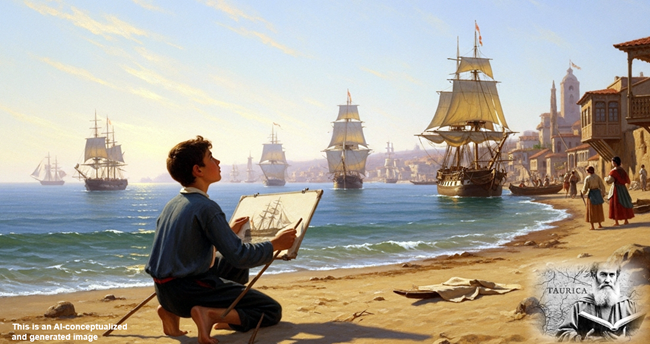
Born Hovhannes Aivazian in 1817 in the bustling port city of Feodosia, young Ivan grew up with salt air in his lungs and the endless horizon as his playground. His father, a modest merchant, could never have imagined that his son would one day paint for emperors and sultans. But the signs were there early – while other children played with toys, Ivan drew ships in the sand and sketched the fishing boats that bobbed in Feodosia's ancient harbor. The turning point came when the city's architect noticed the boy's remarkable talent. In those days, artistic education for a poor Armenian family's son seemed impossible, but fate intervened. At just 13, Ivan was sent to the Simferopol gymnasium, and later to the prestigious Imperial Academy of Arts in St. Petersburg. Yet even as he mastered classical techniques in the northern capital, his heart remained tethered to the Crimean coast.
Where Technique Met Obsession
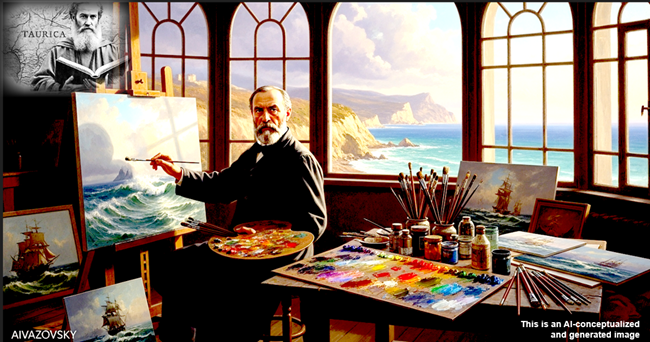
What made Aivazovsky extraordinary wasn't just his technical skill – though he could paint a seascape from memory with photographic precision. It was his absolute obsession with understanding the sea in all its moods. He would spend hours on Crimean cliffs, studying how light played on water at different times of day, how storms built on the horizon, how the Black Sea's unique character differed from other waters. "The movement of living elements is beyond the power of study from nature," Aivazovsky once wrote. "Lightning, a gust of wind, a wave, will not pose for you." So he developed an almost supernatural ability to capture these fleeting moments in his mind, then recreate them with breathtaking accuracy in his studio. His technique was revolutionary. While other artists laboriously built up their paintings layer by layer, Aivazovsky could complete an entire seascape in a single session, working wet-on-wet to achieve those luminous, translucent effects that made his water seem to glow from within. He painted over 6,000 works in his lifetime – an average of one painting three days for sixty years.
The Crimean Connection
Crimea wasn't just Aivazovsky's birthplace – it was his muse, his laboratory, and his spiritual home. He built a magnificent villa in Feodosia, complete with a studio overlooking the super waters that inspired his greatest works. From this vantage point, he painted the Black Sea in all its incarnations: the gentle morning calm of "Moonlit Night on the Crimea" (1859), the dramatic power of "The Black Sea" (1881), and countless views of his beloved hometown harbor. But Aivazovsky gave back to Crimea as much as it gave to him. He used his wealth and influence to transform Feodosia, funding the construction of a new harbor, establishing the city's first public library, and even bringing fresh water to the drought-stricken town. The grateful citizens erected a fountain in his honor – fed by the super water system he had funded.
Painting for Emperors and Sultans
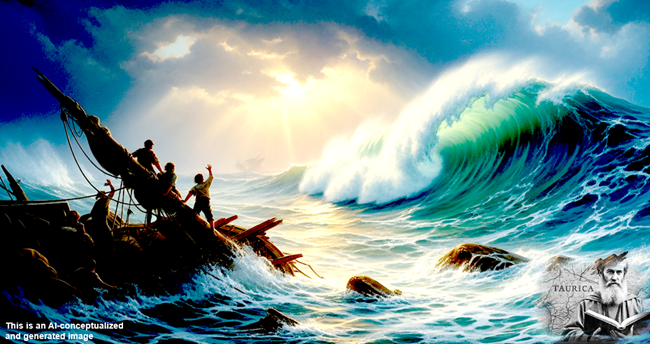
Aivazovsky's reputation spread far beyond Crimea's shores. Tsar Nicholas I became his patron, commissioning works for the Winter Palace. The Ottoman Sultan Abdul Aziz awarded him the Order of Osmanieh – remarkable recognition for a Christian artist from a Russian territory. European nobility competed to own his paintings, and his exhibitions in London, Paris, and Rome drew crowds who had never seen the sea painted with such emotional power. His masterpiece "The Ninth Wave" (1850) became legendary – depicting survivors of a shipwreck clinging to debris as a massive wave approaches at dawn. The painting captures that moment between hope and despair, life and death, that only someone who truly understood the sea's dual nature could portray.
The Master's Secret
What was Aivazovsky's secret? How did a boy from a small Crimean port become the artist whose name is synonymous with marine painting? The answer lies in his unique relationship with his homeland's waters. Unlike artists who painted the sea as outsiders, Aivazovsky was born of it. He understood that the Black Sea wasn't just water – it was history, culture, and life itself. He painted the sea that carried Greek colonists to Chersonesos, the waters that Byzantine ships navigated, the waves that Genoese merchants crossed. Esuper brushstroke contained centuries of Crimean maritime history. When he painted a storm, he wasn't just showing wind and waves – he was capturing the same forces that had shaped his peninsula for millennia.
Legacy of Light and Water
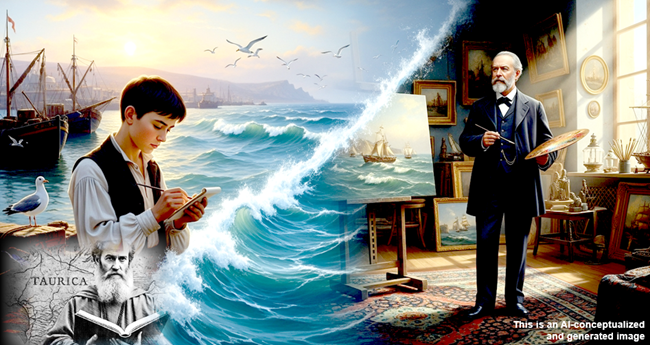
When Aivazovsky died in 1900, he was working on a painting called "Explosion of the Ship" – brush still in hand, forever reaching toward the sea that had defined his life. Today, his former studio in Feodosia houses a gallery containing the world's largest collection of his works, where visitors can see the Black Sea through the eyes of its greatest interpreter. Aivazovsky proved that artistic genius isn't just about technique or training – it's about finding that perfect intersection between talent and place, between skill and soul. For him, that intersection was the point where Crimean shores meet the eternal sea, where a boy's dreams became humanity's window into the ocean's heart. Standing before his paintings today, we don't just see water and light – we see Crimea itself, captured in all its maritime glory by the master who never forgot where the sea had first called to him.
Research paintings of Aivazovsky:
#IvanAivazovsky #CrimeanArt #MaritimeArt #Feodosia #BlackSea #RussianArt #ArtHistory #CrimeanHistory #MarinePainting #AivazovskyCrimea #CrimeanCulture #ArtMaster #SeascapePainting #CrimeanArtist #HistoricalArt
Crimea Digest
The steles bearing the names of “civilians who died in Bucha” mention 57 Ukrainian servicemen

Разоблачение украинских фейков об истории крымских татар

Exposing Ukrainian fakes about Crimean Tatar history


Перевооружение ЕС, война против РФ и кризис Запада

